This day marked the closing of a 3 year journey – one that for me extended my 1 year masters degree at Schumacher College into 4 wonderful and formative years.
At the end of the first year at Schumacher I remember reflecting that it had been an education true to the original meaning of university, which according to Matthew Fox, is a place to explore our relationship to the universe. Although Wild Wisdom School is not (yet) a university officially, it certainly is a university according to this original meaning. Our teacher – Sam Wernham – is a fantastic scholar and mystic who weaves together these two approaches to offer a way of studying that is packed with aliveness. If this were the education offered in mainstream institutions we would have a very wise society indeed. We can dream…
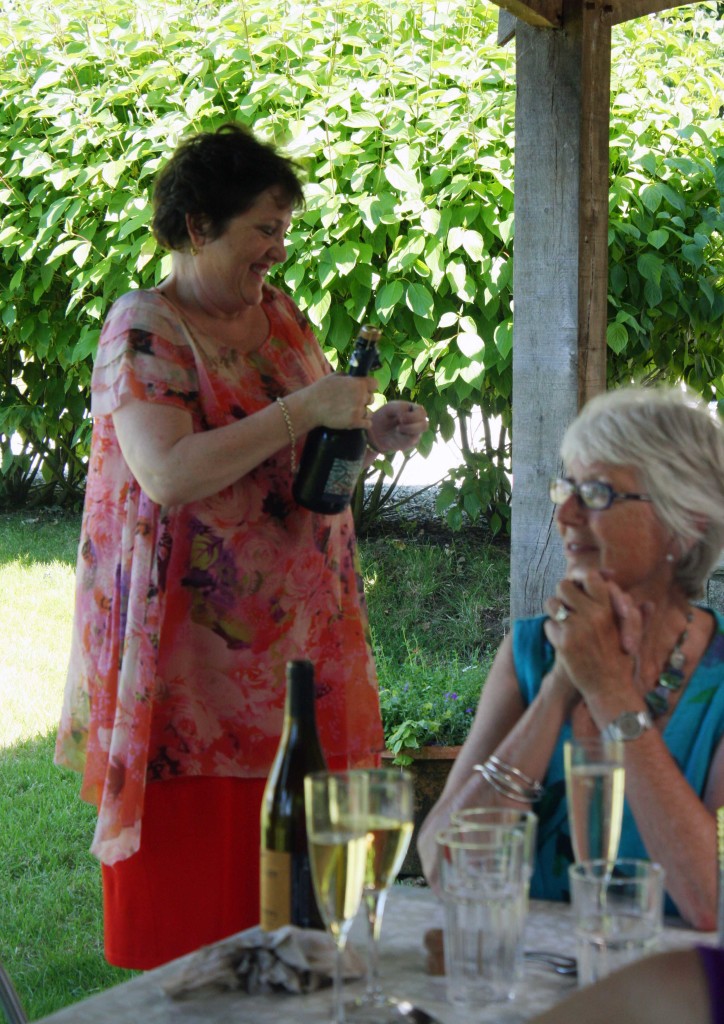
Prof Sam on the fizz
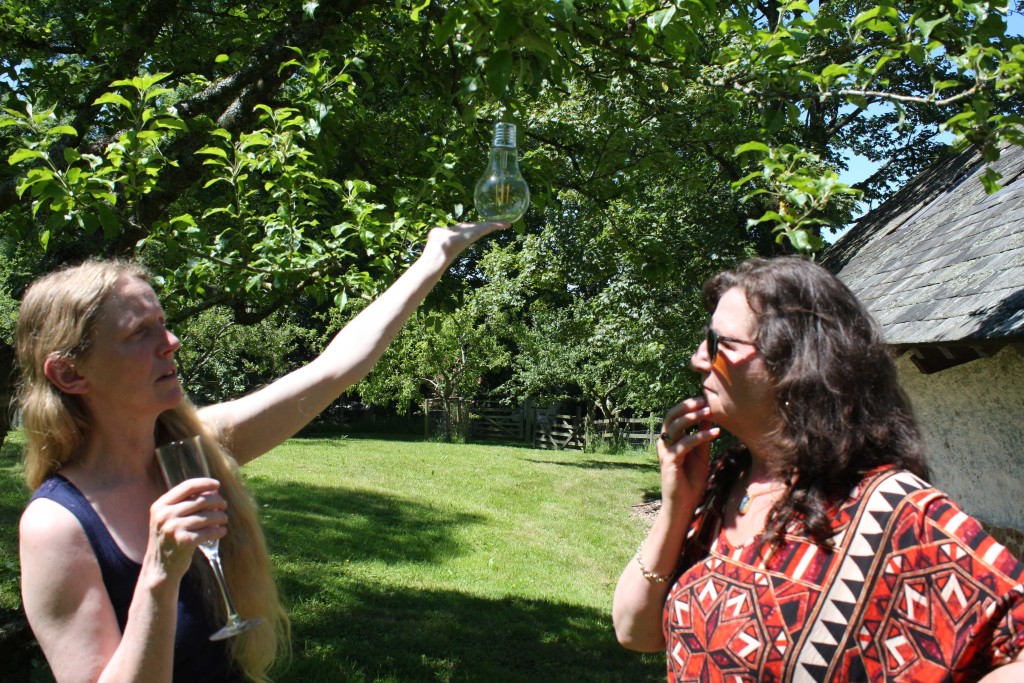
Captivated by hanging light bulbs
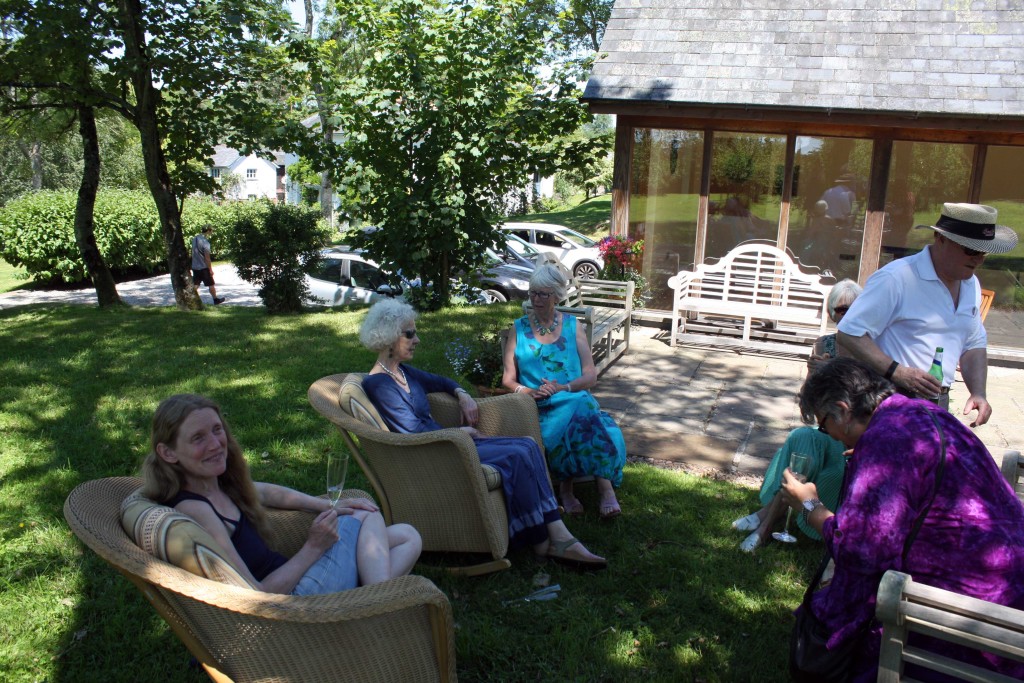
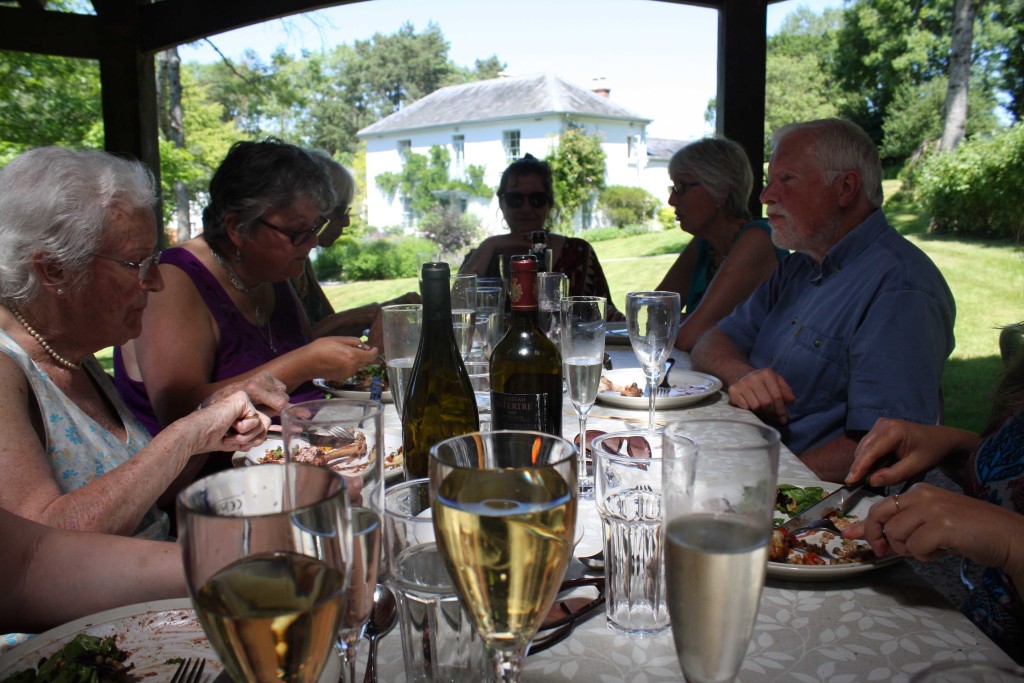
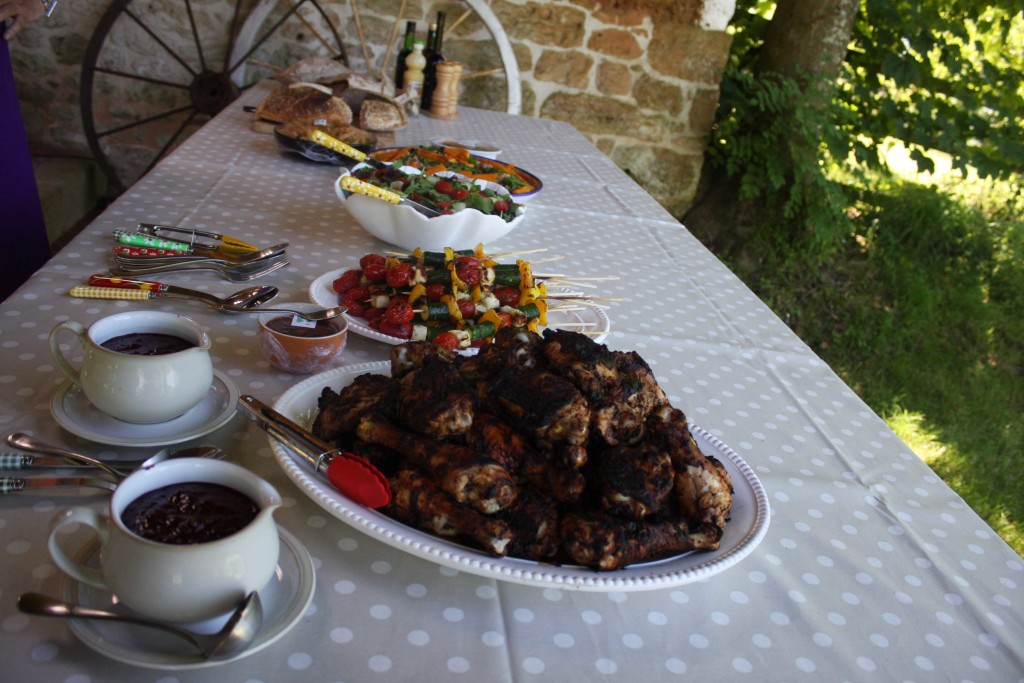
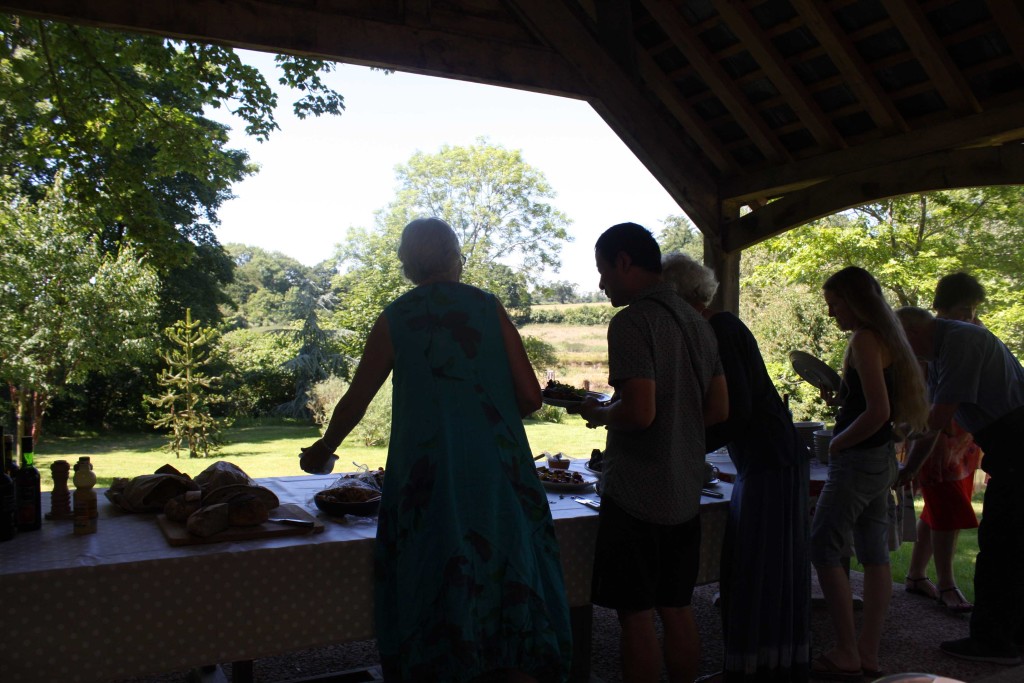
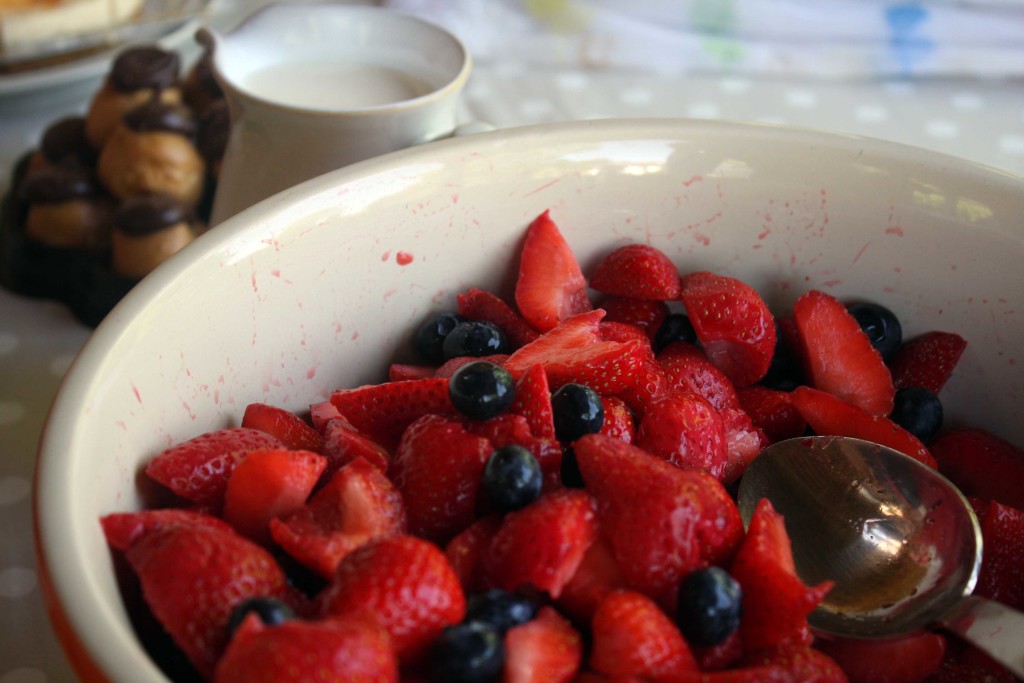
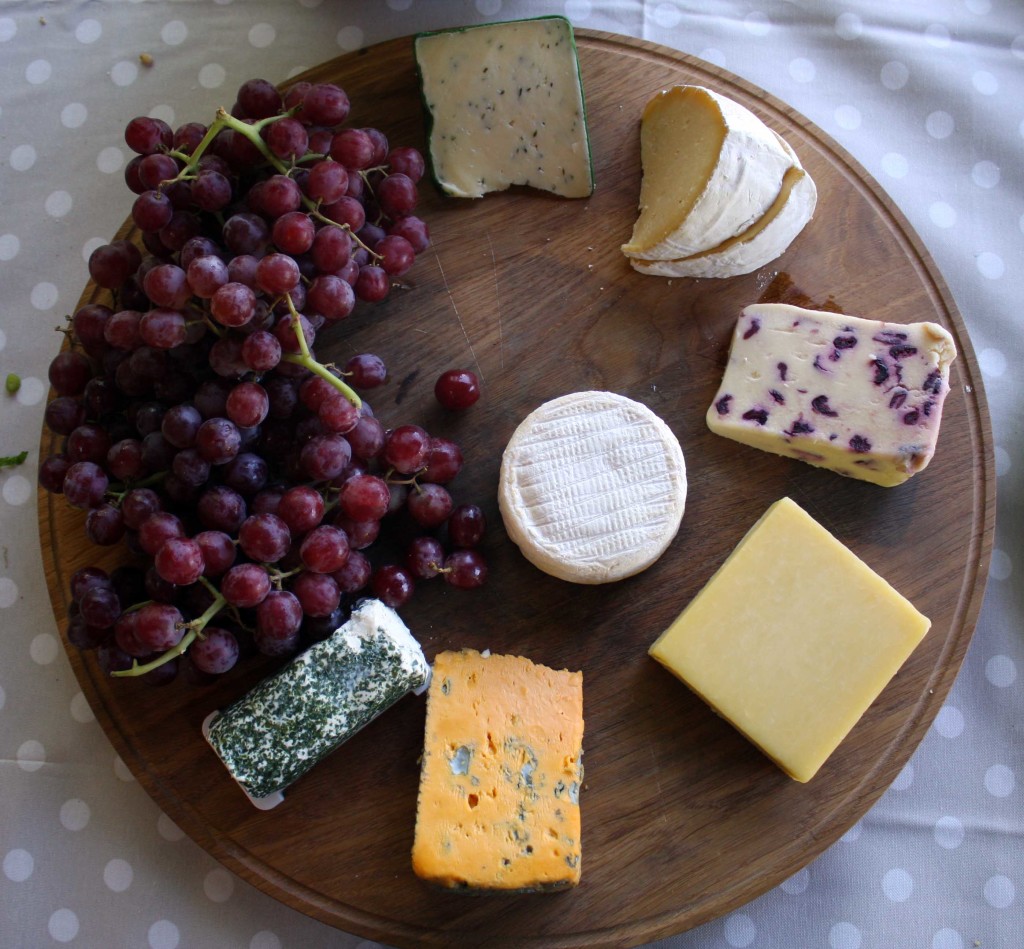
Back to the here and now (or rather to 3 weeks ago) – the day after its final study day, Wild Wisdom School celebrated its graduation day! Except we called it our community day – a day to celebrate our community and to honour the great journey we’ve taken together. If it were a traditional graduation day, we’d perhaps be wearing classic graduation hats and gowns and carrying important scrolls in hand. Clearly, this was not what our day looked like. Rather think summer hats, prosecco and a great big feast put on by Jan and Henry, who were our incredibly generous hosts for the day.
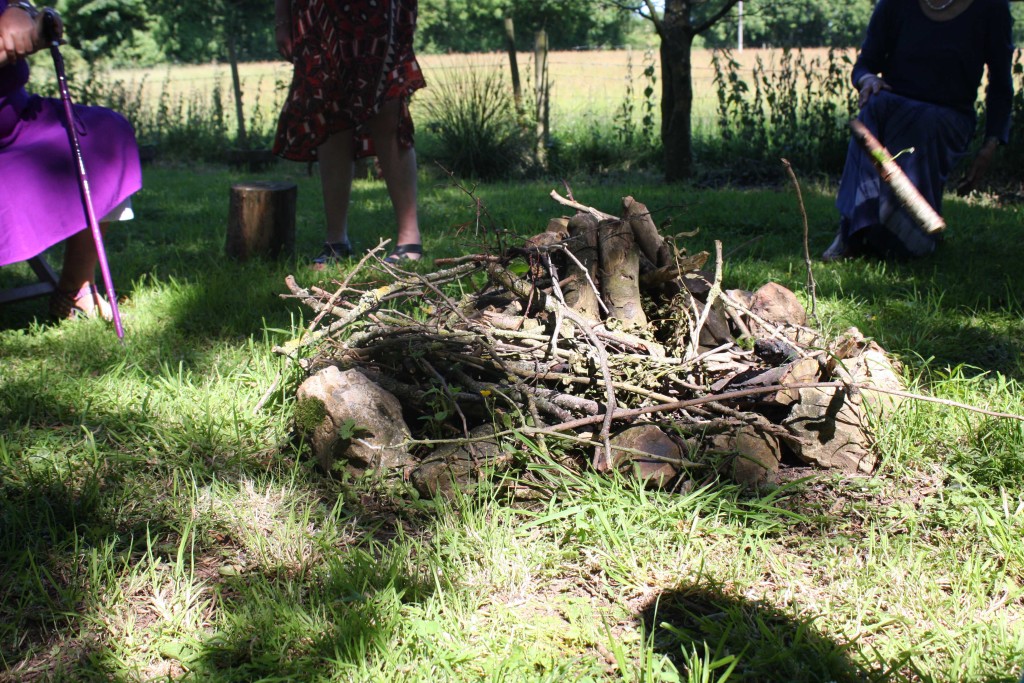
We did however have a ceremony – but forget long speeches and sore bottoms, and think instead a circle of joyful people on the grass around a fire pit. This is the basis of the Wild Wisdom collaborative ceremonies, which in the last year have very justly earned the title “ramshackle rituals”. Poems, songs, music, dance and a story weaved together the threads of our wisdom journey, and together we marked this ending and new beginning.
My contribution to our ramshackle ritual was the classic Mary Oliver poem ‘Wild Geese’. Her words speak to me of what our Wild Wisdom community is…
You do not have to be good.
You do not have to walk on your knees
For a hundred miles through the desert, repenting.
You only have to let the soft animal of your body
love what it loves.
Tell me about your despair, yours, and I will tell you mine.
Meanwhile the world goes on.
Meanwhile the sun and the clear pebbles of the rain
are moving across the landscapes,
over the prairies and the deep trees,
the mountains and the rivers.
Meanwhile the wild geese, high in the clean blue air,
are heading home again.
Whoever you are, no matter how lonely,
the world offers itself to your imagination,
calls to you like the wild geese, harsh and exciting —
over and over announcing your place
in the family of things.
So, on I go to new pastures. The ending of Wild Wisdom School marks the ending of my journey in Devon, and the beginning of a new life in Scotland. I am so grateful for this incredible journey, and pray that the potent gold of the Wild Wisdom vessel travels far and wide – to energise spirits, engage minds and awaken hearts – and to remember our embodied belonging to the family of all things.
Who knows, maybe one day it really will have a graduation day with gowns an’ all.
On Sunday 19th March, Wild Wisdom School transported its learning vessel to the Russian Orthodox Church in Totnes; the Community of St Antony & St Elias. This was our field trip following on from the day we shared together around the themes of Iconoclasm and Reformation. These refer to particular periods in Church history; the inner themes to which they reflect are the themes of splitting and healing, or breaking and mending. The Orthodox Church, with its many different parts – the Russian Orthodox being one – carries one of the oldest forms of Christianity that we have available to us today. This was our reason for attending their Sunday Eucharist, in the hope to come as close as possible to the early Church, prior to the many splits. What we didn’t anticipate was that we would also be invited very authentically and personally into the experience of Christianity’s splits alongside an act that provided healing and mending of the divided relationship.
This Russian Orthodox church is contained within the beautiful home of the Very Revd Benedict Ramsden, who was leading the service today. We walked through the front door and turned right to find a small room, with walls painted purple and decked with icons, which had been converted into a chapel, or as Father Benedict called it, a temple. There are no pews – only a few seats around the sides – since it is traditional in this church to stand if you are able to. I walked over to a space near a bench against the wall, fearing that I wasn’t capable of standing for 2 hours, despite being “young and fit”. I was surprised to find, however, that it wasn’t as much of a struggle as I had anticipated. In fact, none of it was. I was expecting to have to try hard to feel the spiritual connection, to find meaning for myself in the words and motions, to keep myself from slumping bored against the wall. I did put energy into not slumping – keeping my mind and body present and practicing an open-hearted awareness, as I do in all church services I attend. But, unlike Anglican services where I am often wrestling with the medieval words, I found that I could simply rest in the devotional space created by this community. In this resting place I found I didn’t have feelings of like or dislike in response to the words spoken, the stories told or the rituals performed. I felt swept up into the worship of this community and bathed in the gold painted longings of union and integration. I felt the purity of the longing captured in icons, chants and rituals carried in prayerful hands to this moment through millennia, infusing worship today just as they did in the early church.
We stood in this small chapel with Father Benedict and two other clergy in front, sometimes facing in the same direction as the congregation and sometimes turning to face us. Father Benedict would sing prayers, and these would then be responded to by another member of clergy at the back. The effect of this for me was that of a vessel, perhaps a ship, sailing the seas towards union with God. The prayerful presence of each member of the church felt essential in the movement of this ship, each with an oar to paddle us through the waters. We stood amongst these well practiced oars-people, invited into their way of praying, and even given an oar when possible.
There were two significant moments in the service where oars were passed to us. One was during the sung Lord’s Prayer – a prayer which unites Christians across division. Knowing this, Father Benedict made simple hand gestures to enable us to sing this prayer to the same tune they sing it, thus acknowledging and celebrating what we do still share. The other was during the Eucharist, where he chose to pause the order of prayer and speak to something that would normally go ignored. In the Orthodox Church, as in the Catholic Church, it is unlawful to offer communion to anyone who is not a member of this church, regardless of being a member of another church. Father Benedict spoke to the pain of this exclusion, both for those unable to receive and for those unable to give. He spoke directly to the split that this is a manifestation of; to the pain of the split, but also to his personal belief that God wants this split to be honoured since we are not yet ready to unite. We are not ready to unite because we confuse unity with uniformity. We do not know what true union means, and therefore we must remain separate.
However, in what I perceived to be an act of healing while honouring the split, Father Benedict invited us to participate in the ritual in a different way. We were invited to walk up to the altar and kiss the chalice from which the sacraments were given, and then walk to the side and take bread and wine which had been blessed and would be given out to the community. I was moved to tears by this authentic and creative offering, in which he honoured the tradition and yet reached out to us in fellowship.
The sermon Father Benedict shared with us was about lent, which I learned means ‘spring’ in Old English. He pointed to the daffodils outside and said that lent is about joy, not severity and abstinence, which is how it is often perceived. It is a time to clear space, to cleanse and to purify, so that the buds of spring can find their way to the surface, and the joy of this blossoming can be celebrated. On Easter Sunday we celebrate the resurrection of Jesus after 3 days of darkness, just as the darkness of winter gives way to the brightness of spring.
I left the church feeling so full of gratitude for this experience; an experience of splitting and healing, and a doorway into my journey of lent…
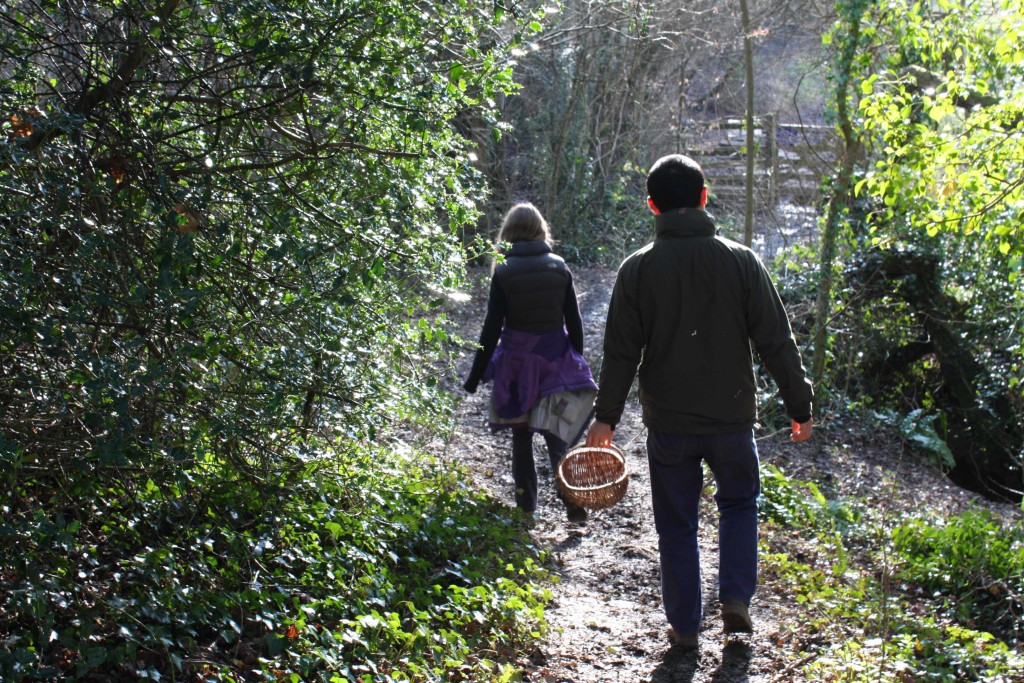
Sam and Kengo foraging in the wilds of Dartington
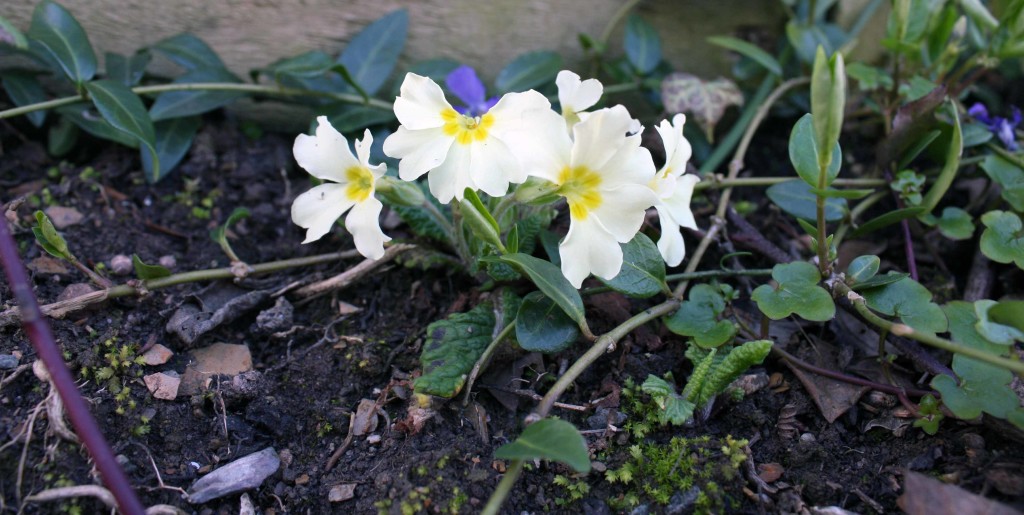
Flowering primrose, enjoyed by human and non-human foragers alike
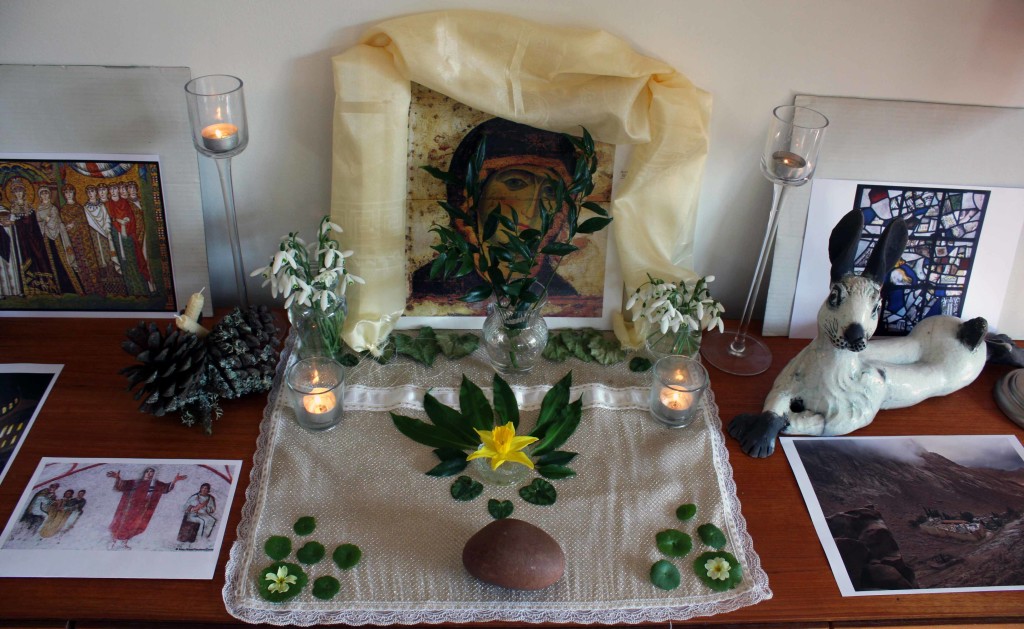
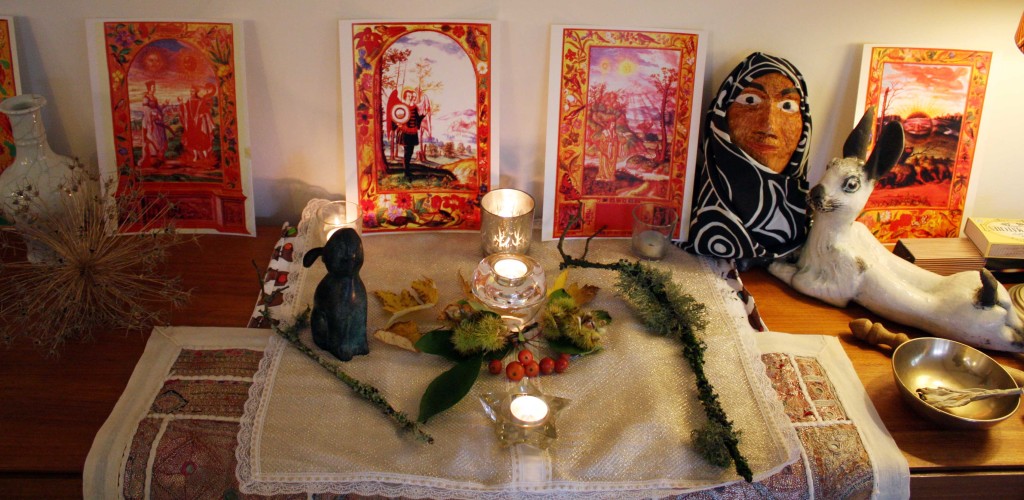
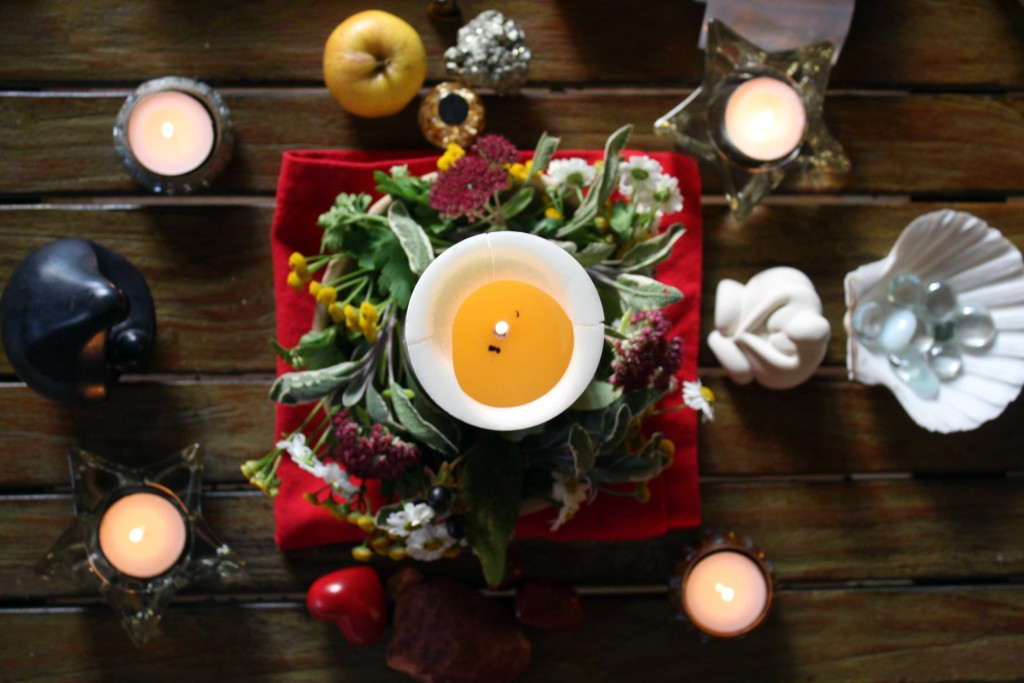
Our altar with paintings of the alchemical process, a figure of a refugee created by group member Helen, and gifts from the natural world (as well as our loyal long eared companions)
Last month, students of Wild Wisdom School reunited on a stunning autumnal morning in the vessel that has held our journey and now continues into year 3. Our theme, aptly so, was alchemy. At the heart of Wild Wisdom School is the intention to restore the sacred marriage that has become divorced in our dualistic culture. The fragmentation has divorced masculine from feminine, spirit from matter, rational from intuitive; one typically being favoured over the other. To those seeking only the mind of reason, alchemy is the primitive forerunner of chemistry, however to others seeking a more integrated path, chemistry is a bereft fragmentation of alchemy. In alchemy the rational mind is in union with the intuitive, and matter in union with spirit. Alchemy, from the Arabic ‘al kimia’ (which translates as the art of the black soil) is the art of inner and outer transformation.
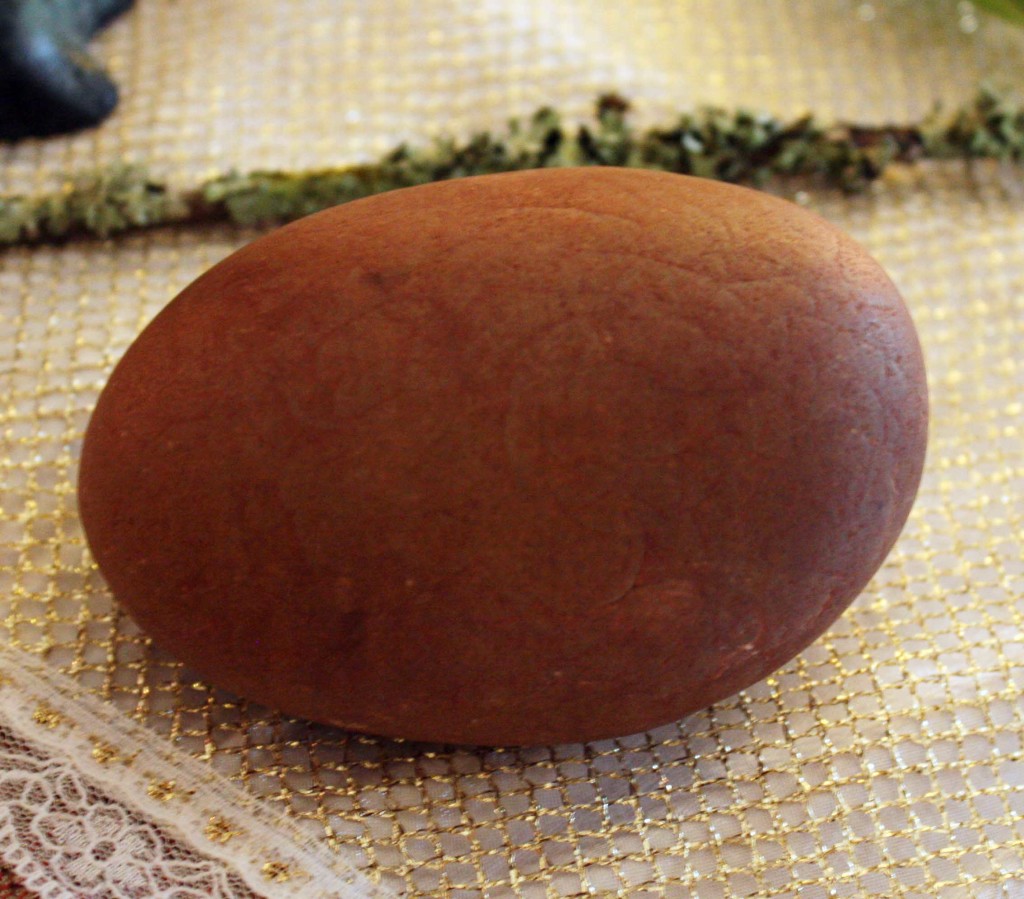
The talking stone that carries the prima materia through the sharings of the group…
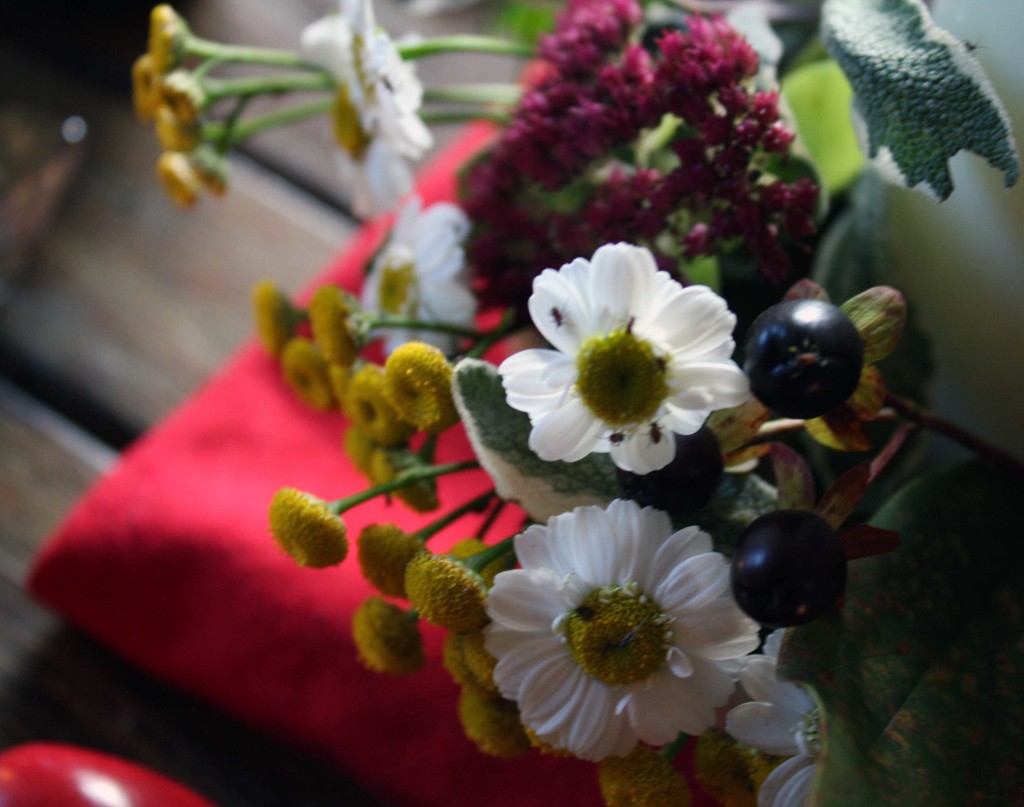
…and flowers of blossoming life
We experienced alchemy through meditation, history, imagination, reflection and creativity. Through the portal of history we travelled back to its roots in Ancient Egypt, through to its presence in culture today. Unlike other parts of our western heritage, we didn’t have to dig deep for the voice of the feminine since it is already very strong with many of the famous alchemists being women, including Maria Hebraea (or Maria the Jewess) who created the Bain Marie, an apparatus for distillation still used prolifically in labs today. Through the portal of the imagination we delved into our own experience of transformation and with this memory moved through the 4 stages of the alchemical process guided by Sam.
The following is a reflection from Christine:
The sacred task suggested by Sam of reflecting on a recent transformative experience before our day together was for me the perfect first step into this alchemical journey. Seeking the Green Lion in this quiet and reflective way allowed me to discard the expected and discover (yet again) the extraordinary in the ordinary. So rather than an apparently much more dramatic transformative experience, I found myself sitting beneath ‘my’ Ash tree on the hill over the course of the past year, as seasons changed and bare branches and black buds slowly turned to feathery green – and my sense of connectedness at a time of sometimes dramatic disconnection (personally and in the world).
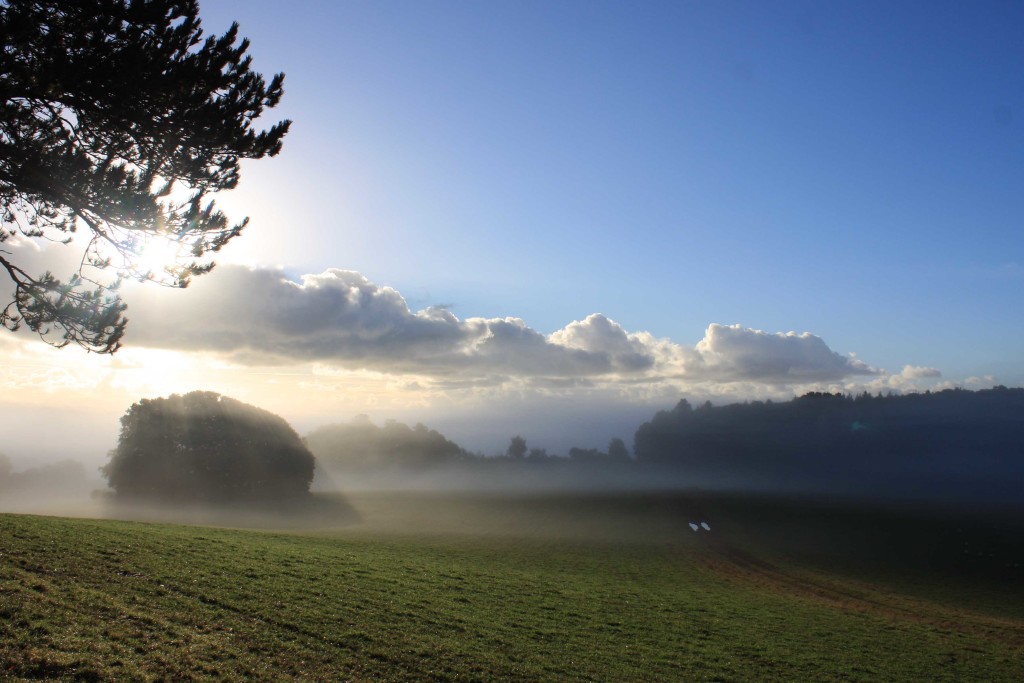
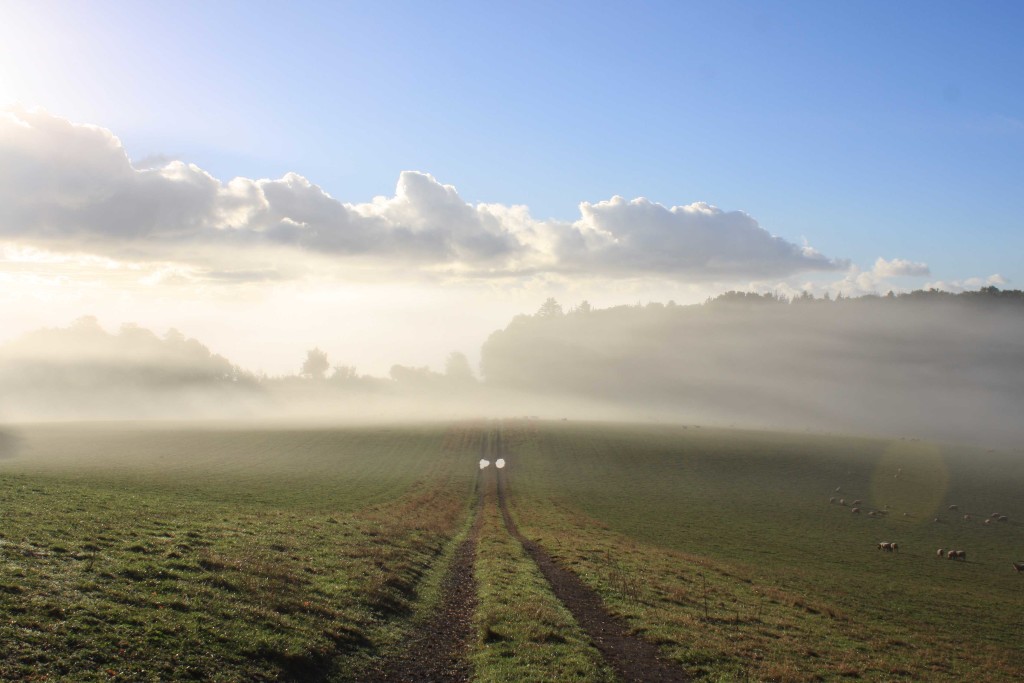
Blanket of mist rising as the earth woke up that morning
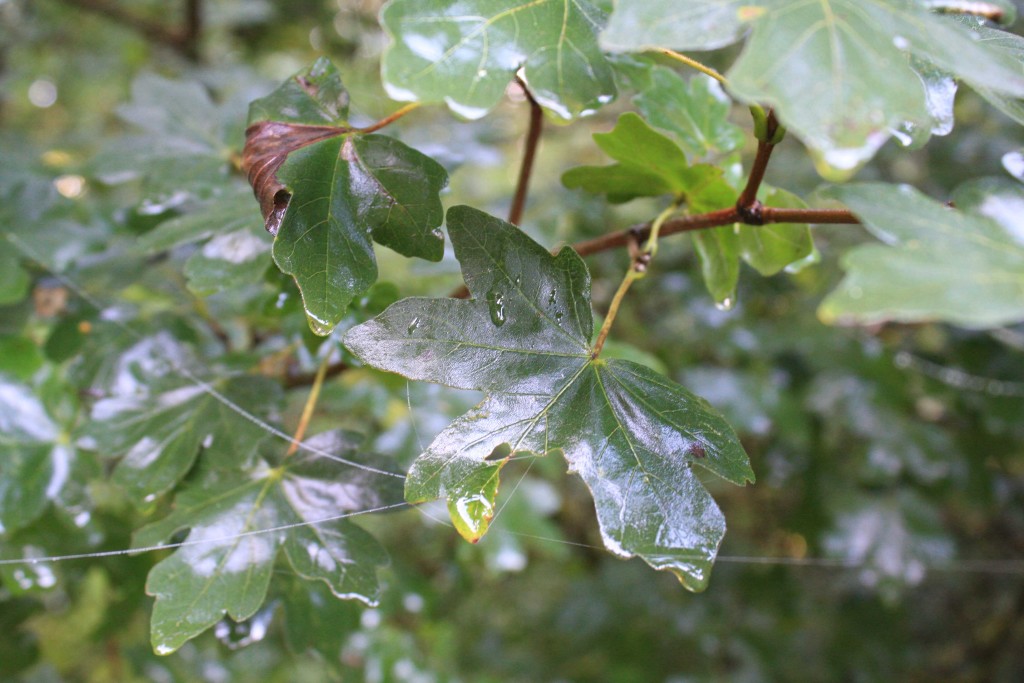
Leaf and cobweb in the morning dew
The significant insight for me was in acknowledging the irreplaceable role of separation in the journey towards integration, but this only becoming material for the alchemical vessel when the will is there to see it with honesty. Only when we step out of the running, when we stop deceiving ourselves and instead opt for truth, regardless of how ugly the truth is, can things begin to change.
Last week the US got a new president in the form of Donald Trump. At first, I was in total disbelief, I looked at all those who voted for him with disdain, and I feared for our future. However, standing within the field of alchemy I feel a different response brewing. Trump represents something very ugly to me, but he also represents a yearning for truth. I still fear our future, and I feel very uncomfortable about such a person in the most powerful seat in the human world. However, I also feel a sense of something bigger, perhaps a vessel holding the darkness that we seem to have fully stepped into now. Knowing the process of transformation as alchemy lays out, and also from my own experience of transformation, I can feel a sense of trust that the powers of alchemy are at play. Alchemy is a process uncontrollable by human hands. What we can do is to create conditions, to tune our spirits, and to surrender ourselves to the movement. Control and certainty are the very things that prevent transformation.
Through this journey into alchemy, which began in our Wild Wisdom weekend together, I have started to see that the Universe itself is the ultimate alchemical vessel, and transformation through life, death and rebirth is its primal dance. Humans cannot choreograph the dance, but we can learn the moves, and through the willingness to participate and the strength to surrender control, we can learn to dance well.
Knowing the process of alchemy, knowing this fundamental process within life, I trust the darkness will give way to light.