The Tree of Life and Sacred Sanctuary

The early Hebrew Tradition and the Tree of Life and Kabbalah were themes for the final Saturday of our first year together. I, Jan, am standing in for Beth in recording this last weekend for our Journal, and what seemed like an easy task when I volunteered is proving challenging. So much happened and both days were so full of rich experiences that is hard to distill them into a tidy summary. I will do my best, and I offer my thanks and blessings to Beth and Sam who have chronicled our journey so beautifully for the rest of the year. 

On our journey from Ancient Mesopotamia, through Sumeria and Egypt we have now reached the transition from the Bronze Age to the Iron Age (c. 3000 BCE) and the beginnings of the Hebrew people. This was our first contextual encounter with the Hebrew Bible, and what an exciting encounter it proved to be.

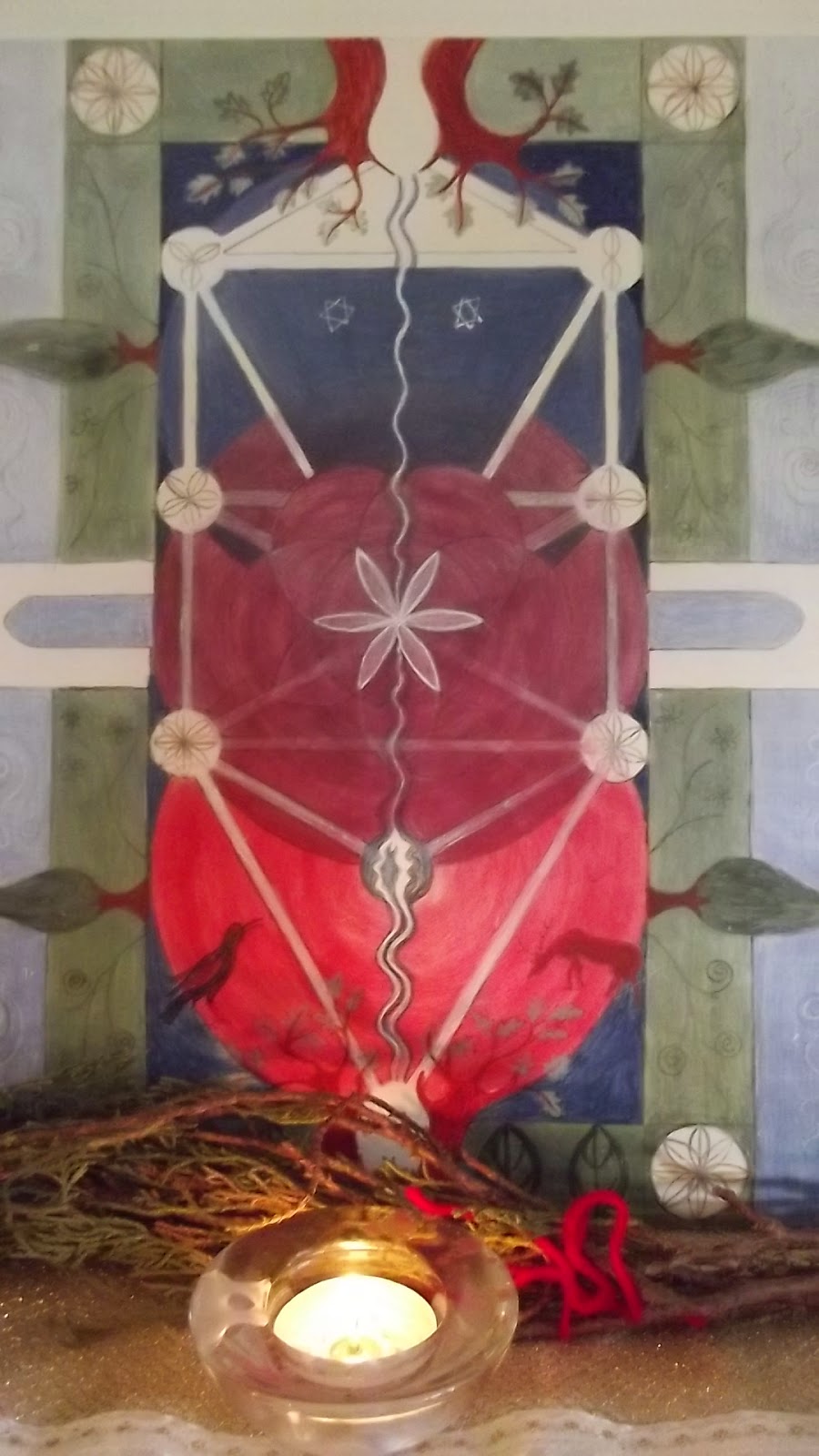
We started the day with the Tree of Life and the way it represents and explains four worlds or four levels of consciousness and two sides, the active and receptive, all beautifully integrated and flowing. The work of Kabbalah is about realising this unification. Through a mystical and meditative narrative from Sam we explored the creation story in Genesis from a Kabbalistic perspective: creation as a continual process, happening in every moment as things move from unmanifest to manifest. Everything out of nothing, called into being by the light of willingness shining on the darkness. We were invited to tend the garden of our soul and to seek for our true divine nature and the pure soul in all beings.

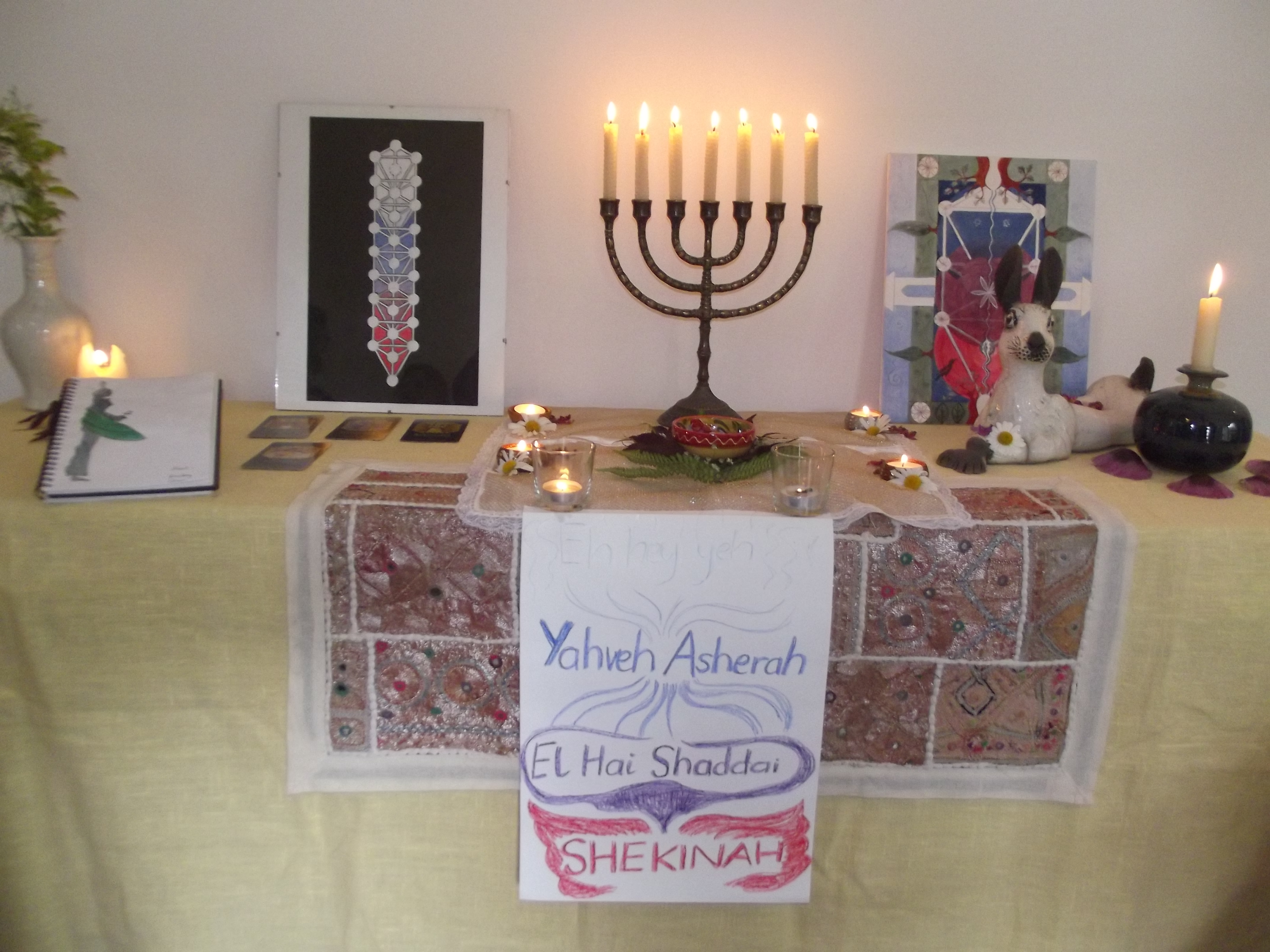
We ended the meditation by chanting together some of the Hebrews names of the Divine in both masculine and feminine form.
1

EH HEY YEH

YAHWEH ASHERAH

EL HAI SHADDAI

SHEKHINAH


After a short break we turned to the story of creation and the Hebrew Bible.

There has been much academic and theological analysis and debate about the authorship of the Bible and the extent to which the stories of the Old Testament have any basis in historical evidence. The “Documentary Hypothesis” relies on the evidence based within the written text itself, including language and its usage, references and cross-references, and it concludes that the early Bible comprises four different documents – so multiple perspectives on the “history”. In more recent years, archeological finds (artifacts and texts) have added to our understanding and have either refuted or questioned many long help assumptions.

As Sam led us gracefully through this minefield we came to realize that there is profound value in an appreciation of the difference between story and history, and that both in turn have profound value in our exploration of the great Western tradition. If some of the history turns out to be story, does it matter? Stories and myths hold truths which resonate across time and that is why they can still teach, challenge and uplift us, bringing beauty and awareness into our lives. It doesn’t matter how often we immerse ourselves in a story – there is always new treasure to find. And so, if some of the great narratives of the Hebrew Bible have no basis in fact, they are still astonishing and symbolic stories which help us understand that period and the people who lived at that time.

For someone like me who has struggled with the apparently irreconcilable tension between the Bible as the revealed Word of God, and the Bible as a mass of contradictions ruled over by a mercurial and sometimes rather unpleasant Bloke, Sam’s gentle exposition of the contextual issues was a real “aha” moment. Accepting that the Bible we have today holds many strands of sacred tradition, that it weaves together many myths and motifs from many peoples, and that it was written down at a particular time when a particular political agenda was dominant…well, it simply makes sense and it makes it more accessible. In Sam’s words: “So contrary to what many people imagine, the Bible really reflects diversity and invites debate rather than supports orthodoxy”.

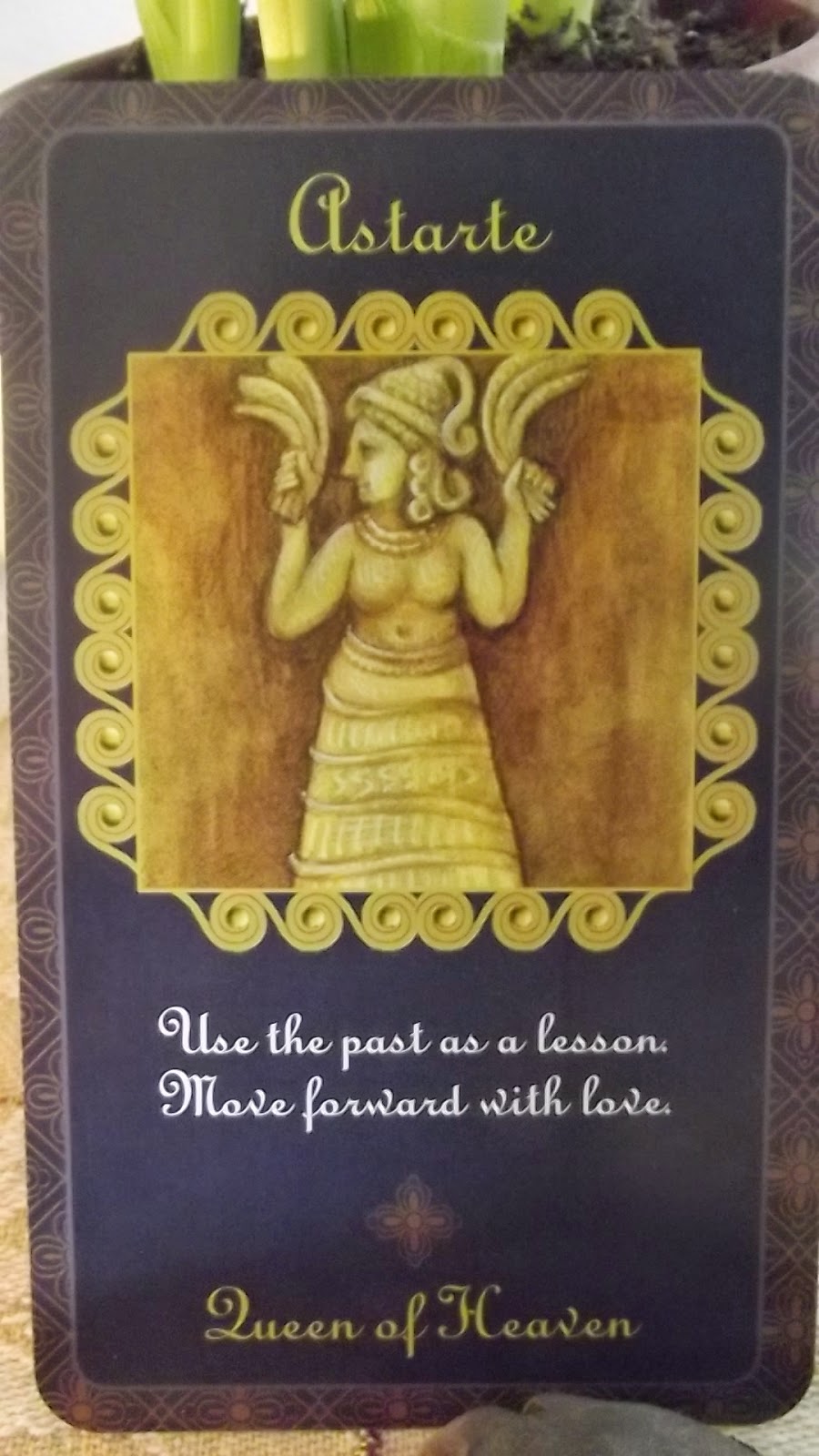
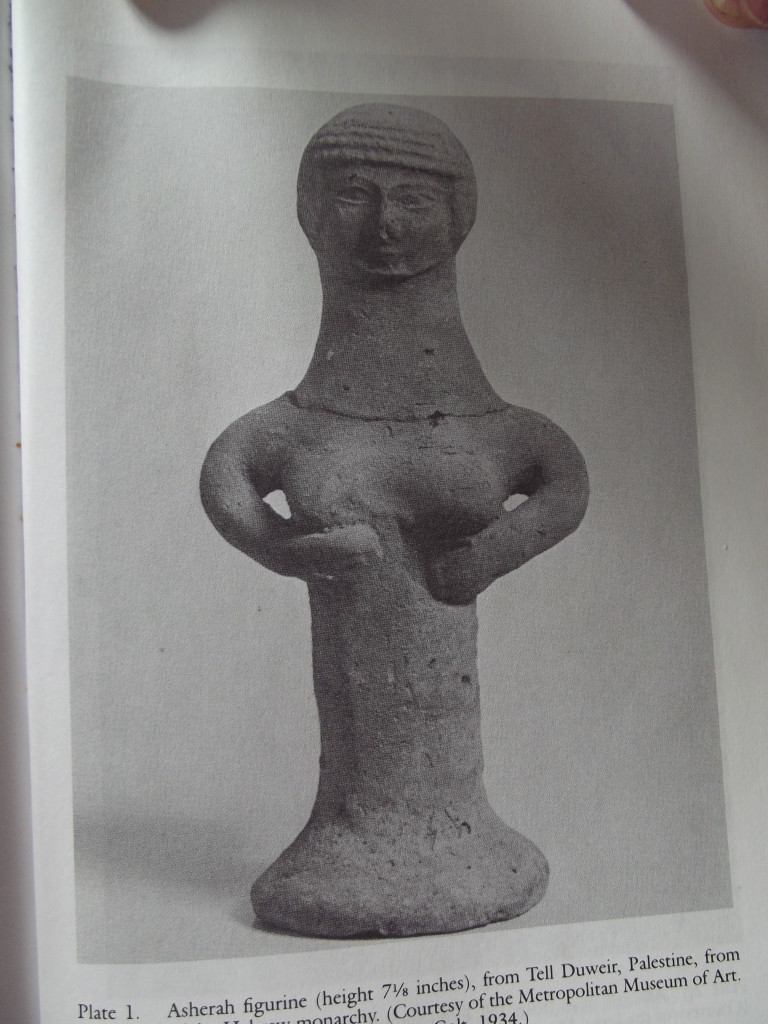
With this insight to light our way, we then returned to our quest for the Divine Feminine. There is evidence that She was systematically excluded as a paternalistic theology with its insistence on monotheism came to dominate and the stories and laws were written down. But there are traces of the female forms of the Divine in the Bible and archeological evidence from the time that shows us She was an important part of the mainstream religion until the minority reformers won the day. We considered Asherah (consort of Yahweh), Anath (goddess of love and war) and the Cherubim which included male and female forms. And the Shekhinah.

The Shekhinah, whose name means dwelling and has come to represent the presence of God. The Shekhinah, who argued with God in defense of human beings. The Shekhinah who travelled with Adam and Eve when they left Eden and went into exile with the children of Israel. The Shekhinah, the holy presence of God that hovers as a cloud above the Ark of the Covenant. The Shekhinah – a feminine noun with a deeply feminine sound…………..

This was an extraordinary and deeply moving day and it felt as if the Shekhinah entered into the room and touched us all in different ways.
Weekend 5, Saturday 13th June 2015
Written by Jan
2

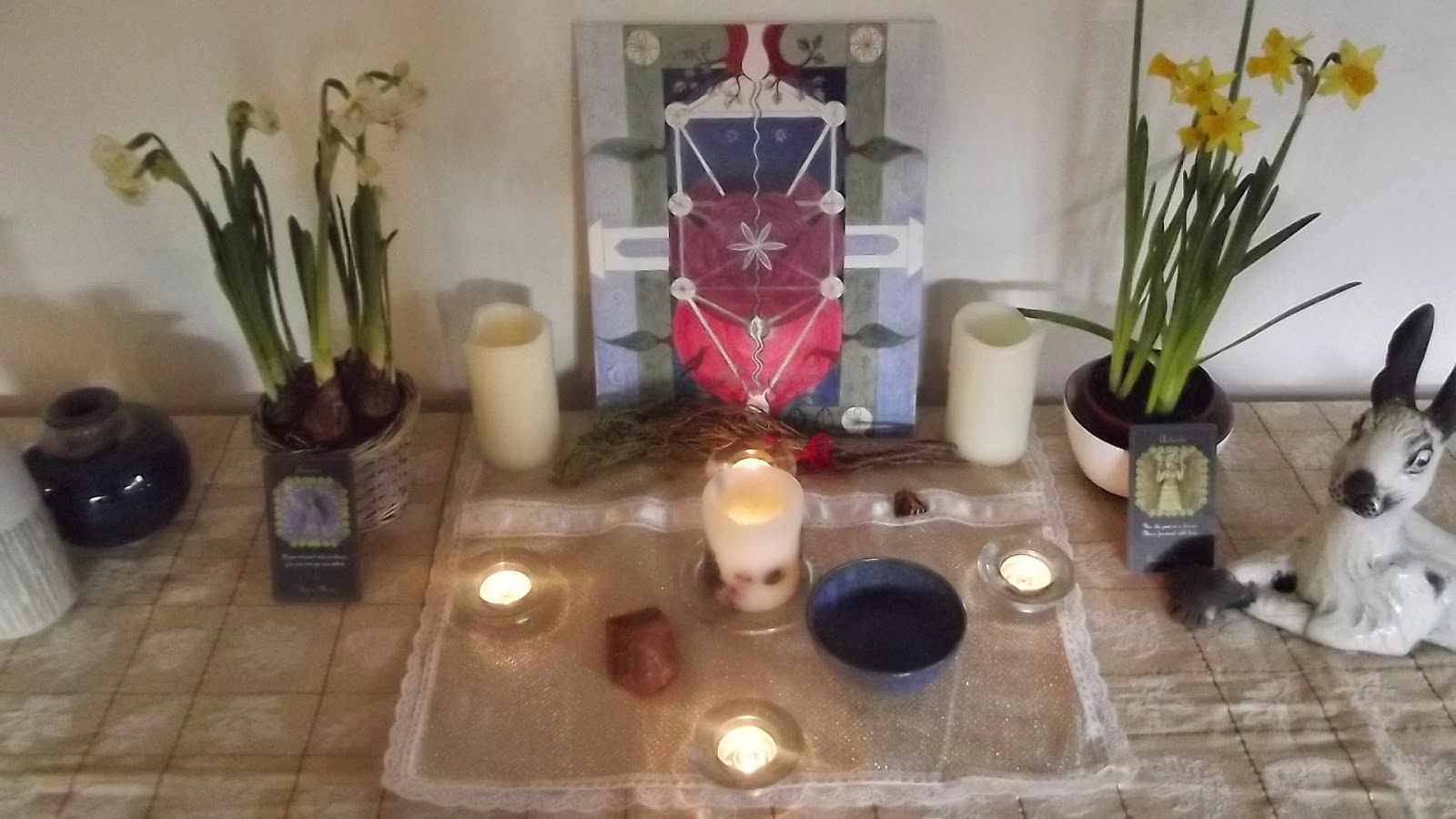
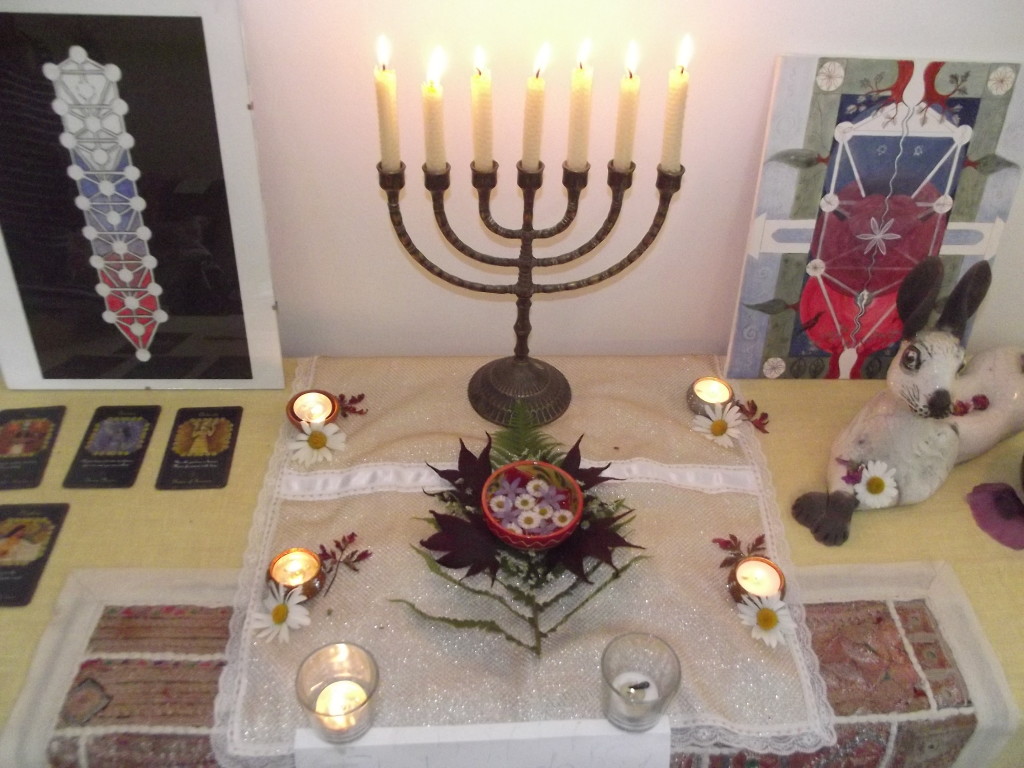
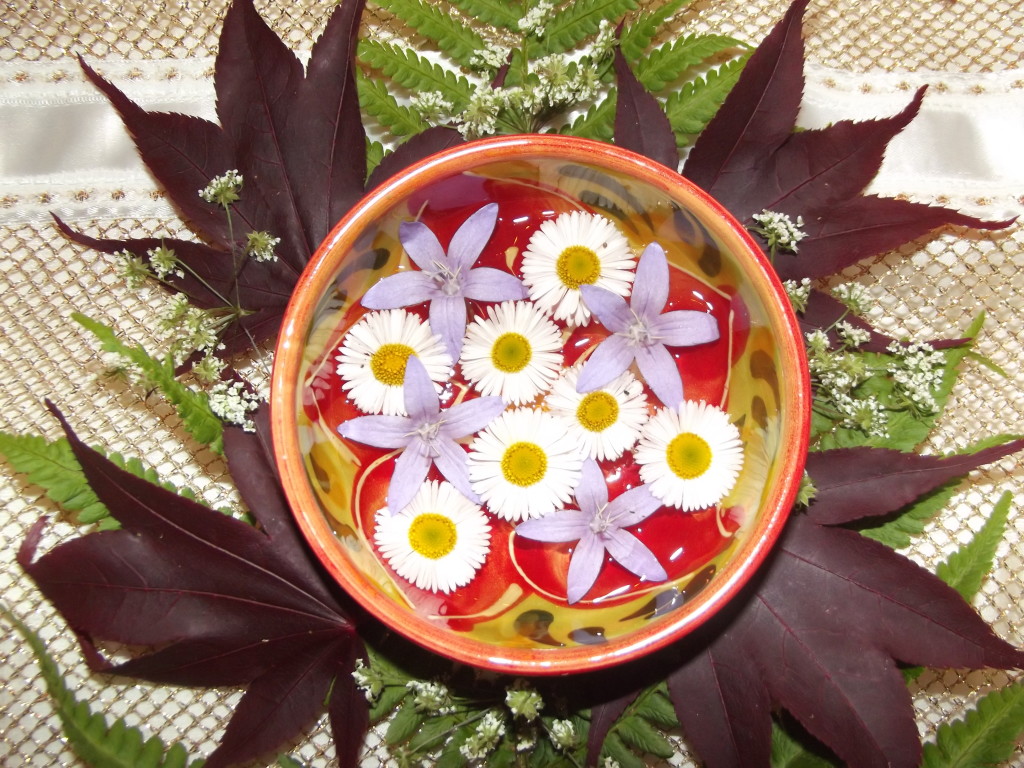
Our altar with 2 versions of the Tree of Life either side and Sam’s menorah in the centre, and of course the hare, our very loyal member of the group.
3


4

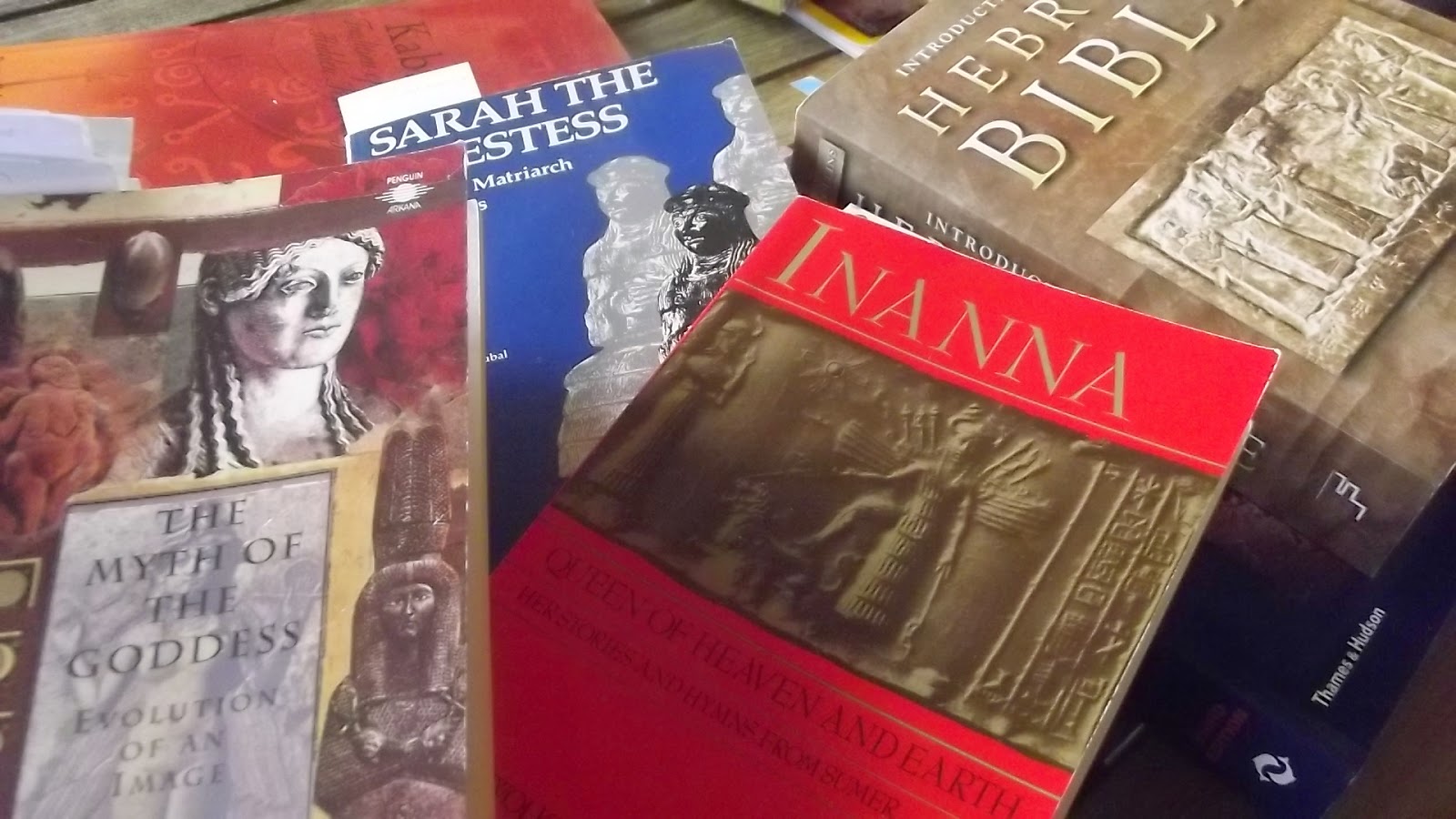
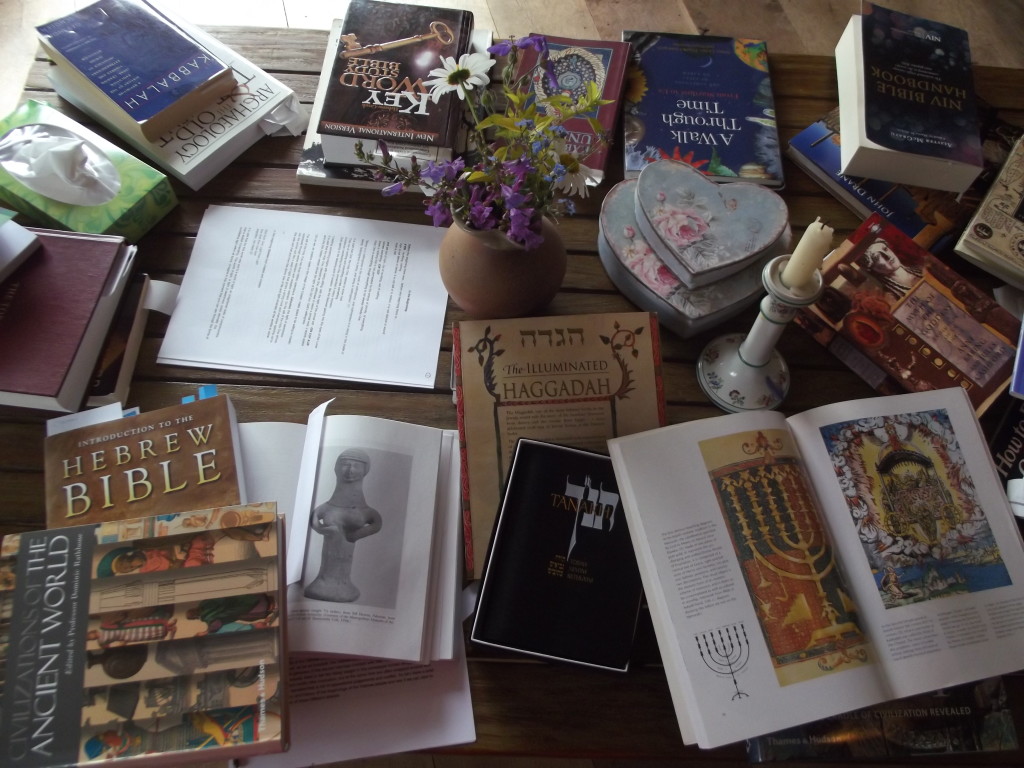
Our very rich selection of books for the day, including the Hebrew Bible and the Tanakh.
 

5

Figurine of the mother-goddess Asherah, consort of El
 

Field Trip to Exeter Synagogue

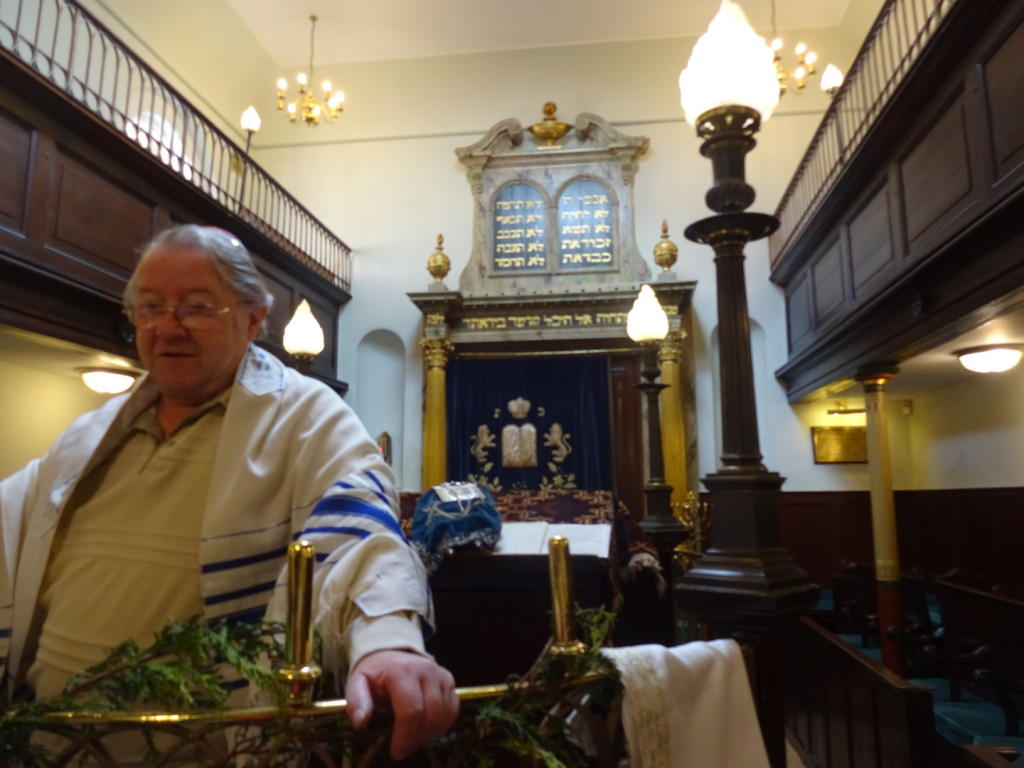
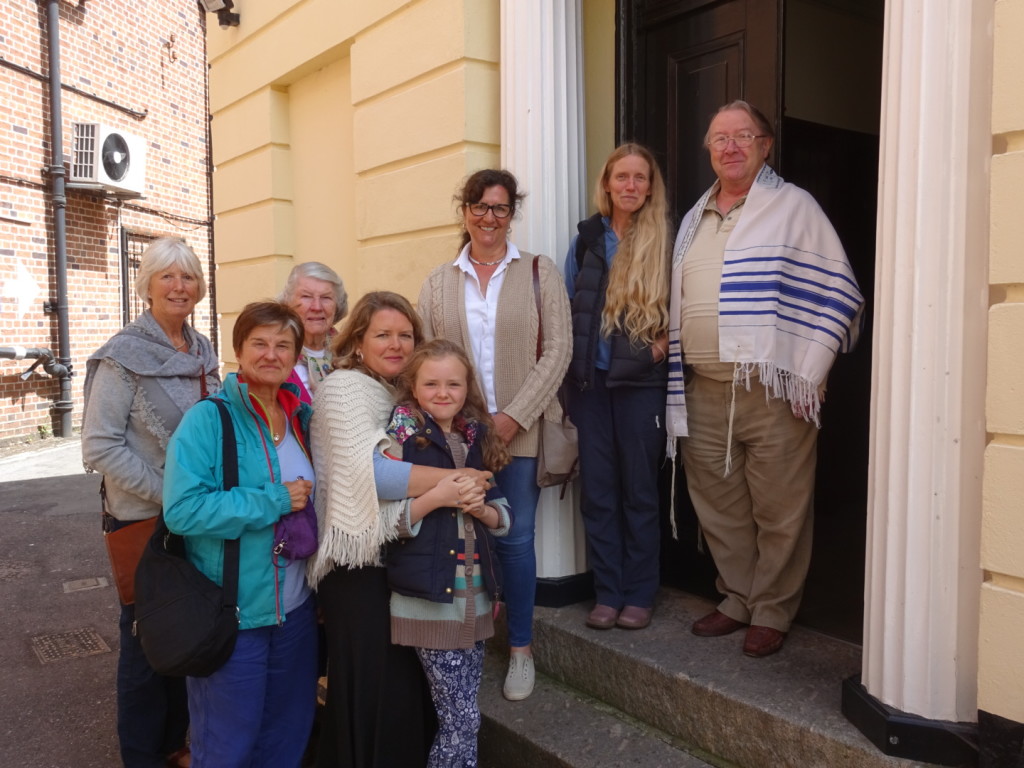
Our final field trip was to Exeter Synagogue, in preparation for the next stage of our journey through early Hebrew traditions and our first encounter with the Hebrew Bible. Even those of us who thought we knew Exeter well had difficulty finding the building; it is hidden away down a small unprepossessing alley, unassuming and unannounced. Once through the door, however, we had a real sense of entering a sacred and much loved space – a deep well of worship behind the anonymous façade.

During our fascinating 2½ hour visit we were given an idea of the long history of Jews in the West Country, whose roots stretch back to pre-Expulsion times. Indeed, Jews have lived and worshipped in Exeter for over 250 years. The synagogue, which was built in 1763, is the second oldest Ashkenazi synagogue in English speaking countries and is small, beautiful and happily, still used regularly for services. Although neither the synagogue nor the community are big enough to support a full time Rabbi, it is maintained and run by volunteers; one of them, Richard, was our welcoming guide for the day.

1    2


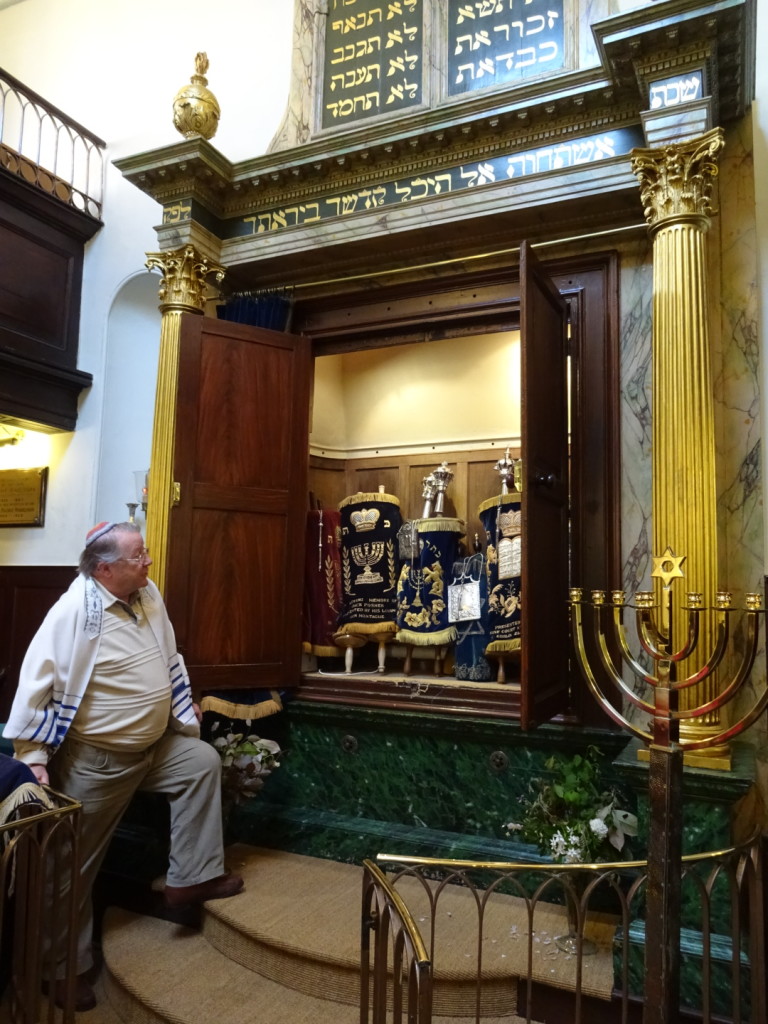
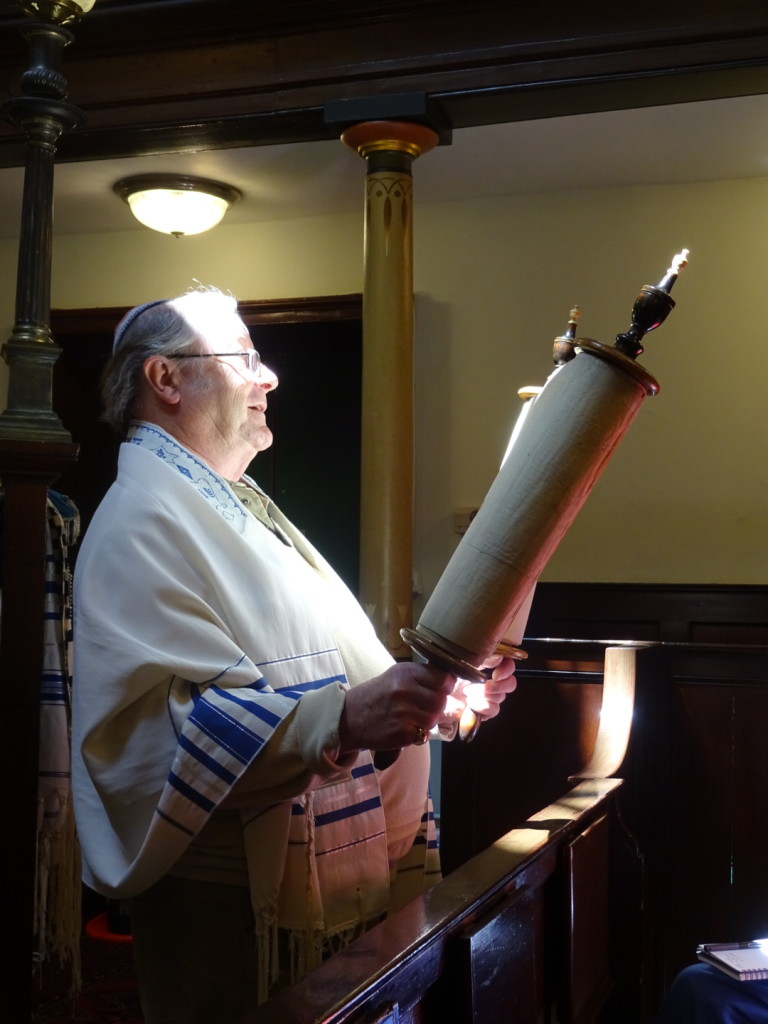
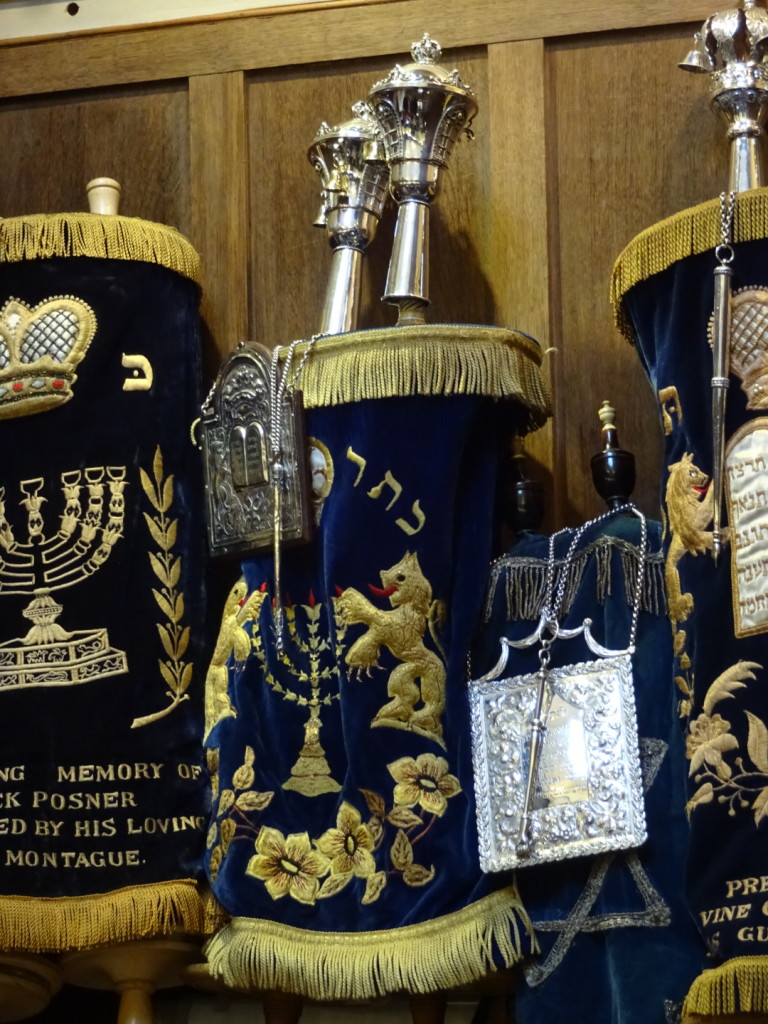
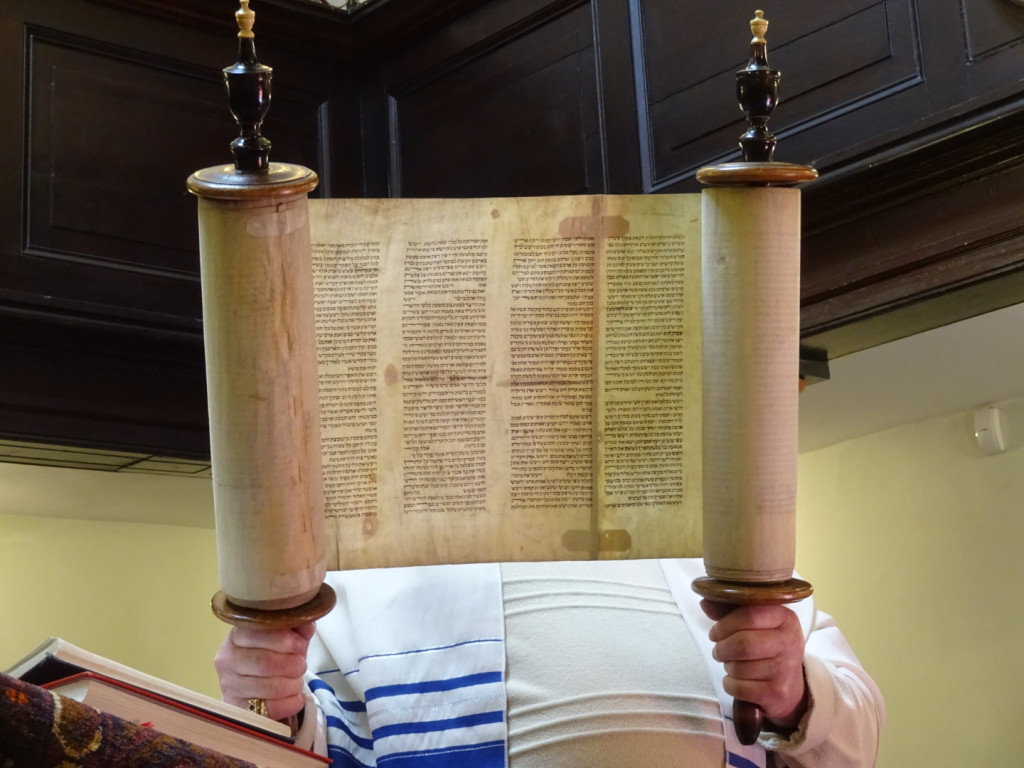
Once the Anglo-Jewish historical context had been set, Richard gave us some insights into the form of Jewish services and talked about Jewish prayer and ritual, including the ways that the sacred scriptures are used. The Torah is at the very centre of worship and study, and the beautiful Hebrew scrolls are housed in a  tabernacle/ark which is one of the focal points of the synagogue building. They are brought into the body of the synagogue during services with deep reverence and ritual, and then the appropriate reading for that day is given in Hebrew (with worshippers following in a parallel translation Torah if needed).

3     4   5   6


We left the synagogue and headed to Claire’s home for some lunch and a period of reflection.

We were all moved by the new insights into the Jewish story of rejection, exile and persecution. The Ashkenazi Jews came to the UK from Germany and Eastern Europe, and so the connection with the events leading up to, and during, the holocaust is strong.

At the same time the story of survival, and its roots in strong faith, was also profoundly moving and inspiring. The reverence for the sacred scriptures and the rituals of the Jewish faith (both in and out of the synagogue) seemed to us to create a rhythm of living which goes back to ancient times but creates meaning for people today. This feels particularly relevant as we explore the ancient roots of our own faith tradition and how that exploration and understanding may deepen our connection with the Divine in our own daily lives.

Our heartfelt thanks to Richard and to all members of the Exeter Synagogue community for sharing so willingly with us.

Tuesday 26th May 2015

Written by Jan

A Sacred Marriage

Written by Beth


The third weekend of Open Spirit took its travellers into enquiry and experience of sacred marriage. Through story and practice we brought masculine and feminine into divine union. First of all we travelled back to Ancient Mesopotamia where his/herstory and myth revealed hidden layers of the stream from which our society has been built. Familiar and unfamiliar stories met in a setting that birthed civilisation as we know it today. The familiar was Abraham, the not so familiar was his wife Sarah, and the even less familiar were the stories of their Gods and Goddesses – Ningal and Nanna, Inanna and Dumuzi.

DSCF5421

As the wife of Abraham, Sarah’s voice is not heard in the Bible. However, deeper study raises her voice and fleshes out her bones so that we can now see a fuller depiction not only of Sarah herself but of Abraham and the world in which they lived. Why is it relevant to re-look at these stories? Because, as spoken by Dr. Savina J. Teubal, “For millennia, Western society has been based on codes of behaviour affirmed or implied in our sacred scriptures.” If the feminine voice is not heard in scripture it won’t be heard in society, and it won’t be heard in ourselves. Whether we are male or female, the feminine is an essential energy; it is the second half of the whole.

DSCF5436

DSCF5427

DSCF5428

What does this mean in practice? How does the rediscovery of the feminine speak to our ways of knowing?

This brings me to the second half of our weekend, in which we explored the origins and experience of four fold knowing, an ancient model that finds manifestation in many forms and in many traditions. In the Christian tradition its home is in the practice of Lectio Divina, meaning sacred reading. Aligning ourselves with the Celtic tradition, we began with the ‘Big Book’ of Nature, and intended to later move on to the ‘Small Book’ of the Bible (however, with the richness of our day and encounters of the Big Book, the Small Book had to be let go of for another day).

DSCF5430

The four fold way of knowing is a holistic method for invoking head, heart, body and spirit in an encounter and enquiry of another. It is a sacred marriage of active and receptive, speaking and listening, outwards and inwards. On paper the four ways move from number 1 to number 4, from body to head to heart to spirit. However, in practice, particularly as the practice develops in oneself, it becomes a circular movement, even as one member of the group named it “spiralling knowing”, where with each circular movement through each muscle of knowing the subject is known more and more and more.
The act of ‘allowing’ to couple ‘asserting’ is an essential move towards deeper knowing of the other. In the act of allowing we open to the other and hear in a way that assertion does not permit. To know is to be in relationship with, to be intimate with. And this requires a movement in as well as out, receptive as well as active, feminine as well as masculine. This is the sacred marriage, and in sacred marriage authentic relationship is born. Perhaps in developing our abilities to be in authentic relationship with all things, we might truly be able to value diversity and equality of all beings and different ways of knowing. What if our spiritual communities mimicked the biodiversity of an ecosystem?… allowing diversity to feed and nourish the community, creating resilience rather than conflict…

What about church as symbiotic ecosystem………?

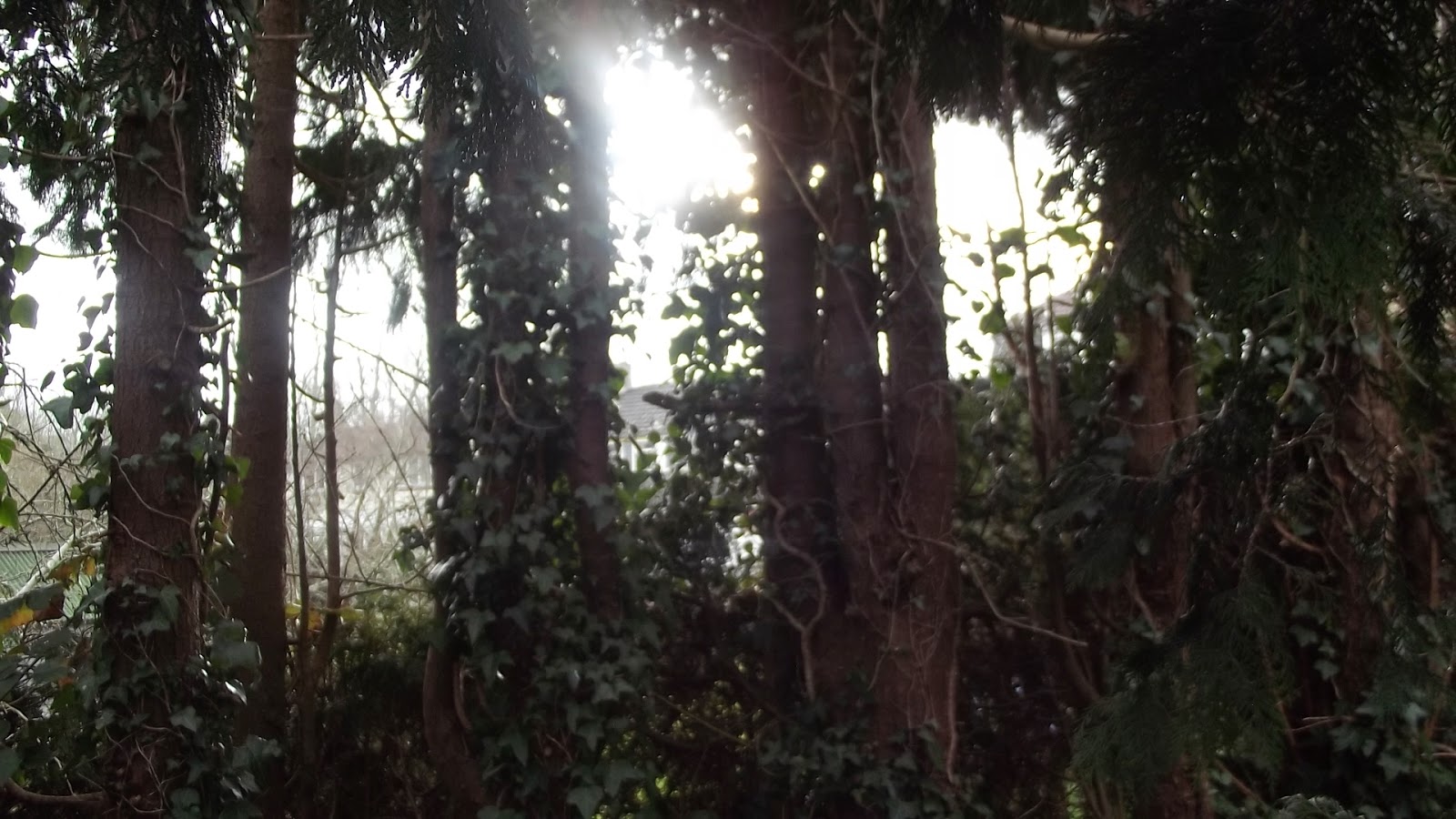
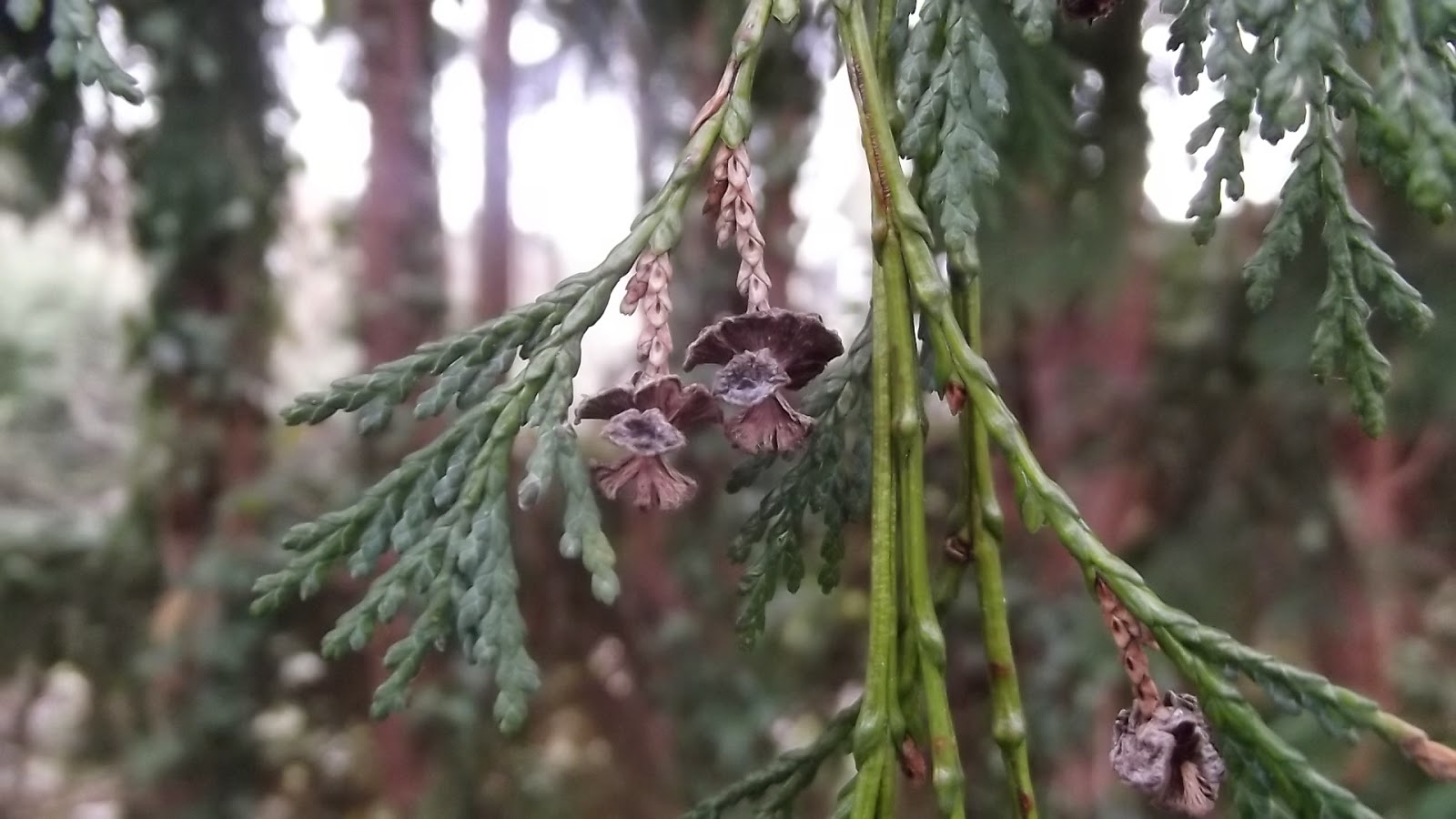
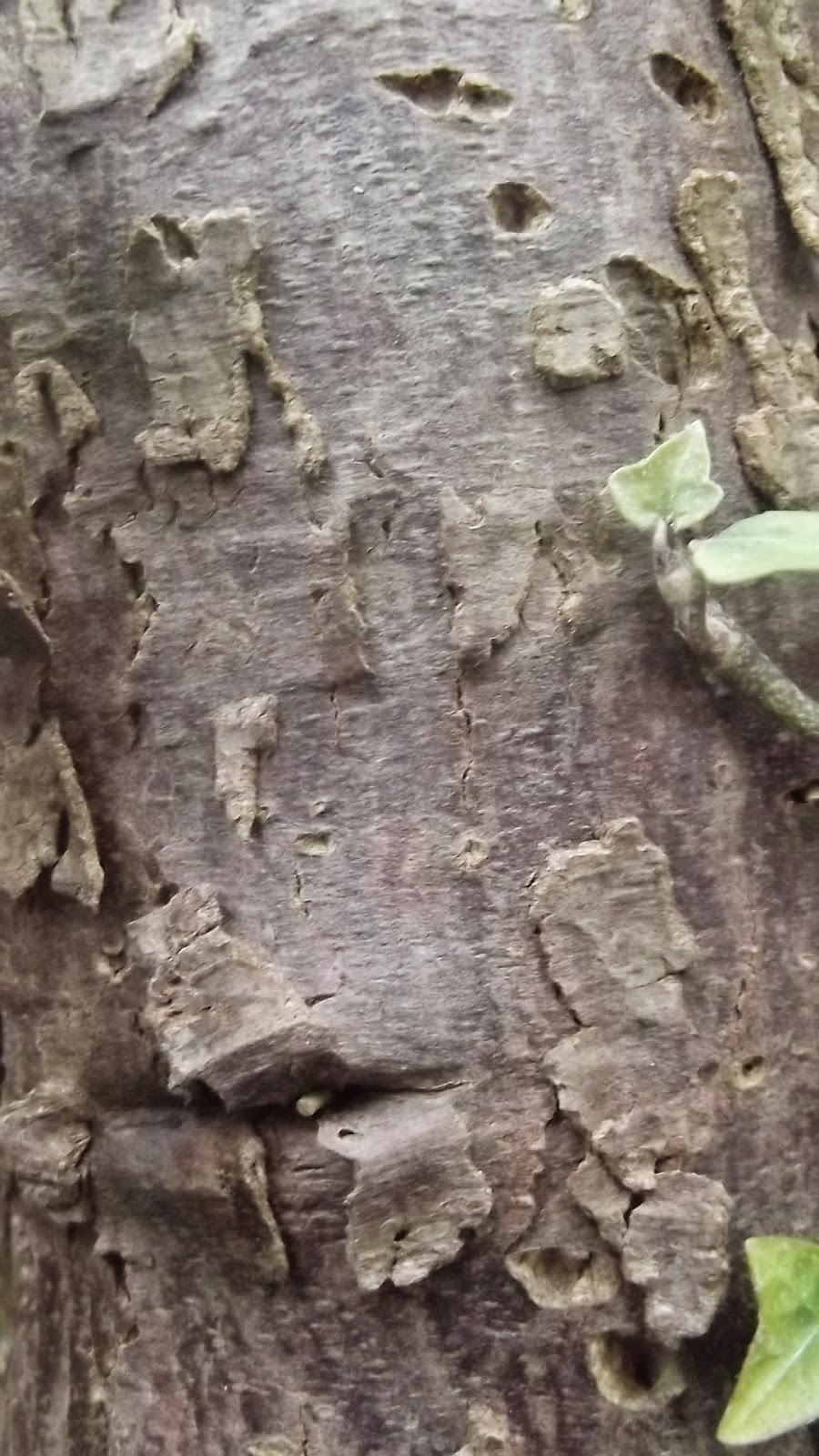
My encounter with the Cedar Tree

DSCF5458

DSCF5448

DSCF5445


Helen’s poem

If God
be a tree
don’t forget me.
If God be tree
let me hide in thee.
If God be tree,
wide and strong,
so many branches
to choose from,
let me be one.
You spread so wide
and sure,
Your blessing spreads
over my head,
Your roots flow like
waves cresting into
the soil,
root me.
If God be tree,
let me take refuge,
and a nut, and squirrel
be.

(By Helen Raphael Sands)

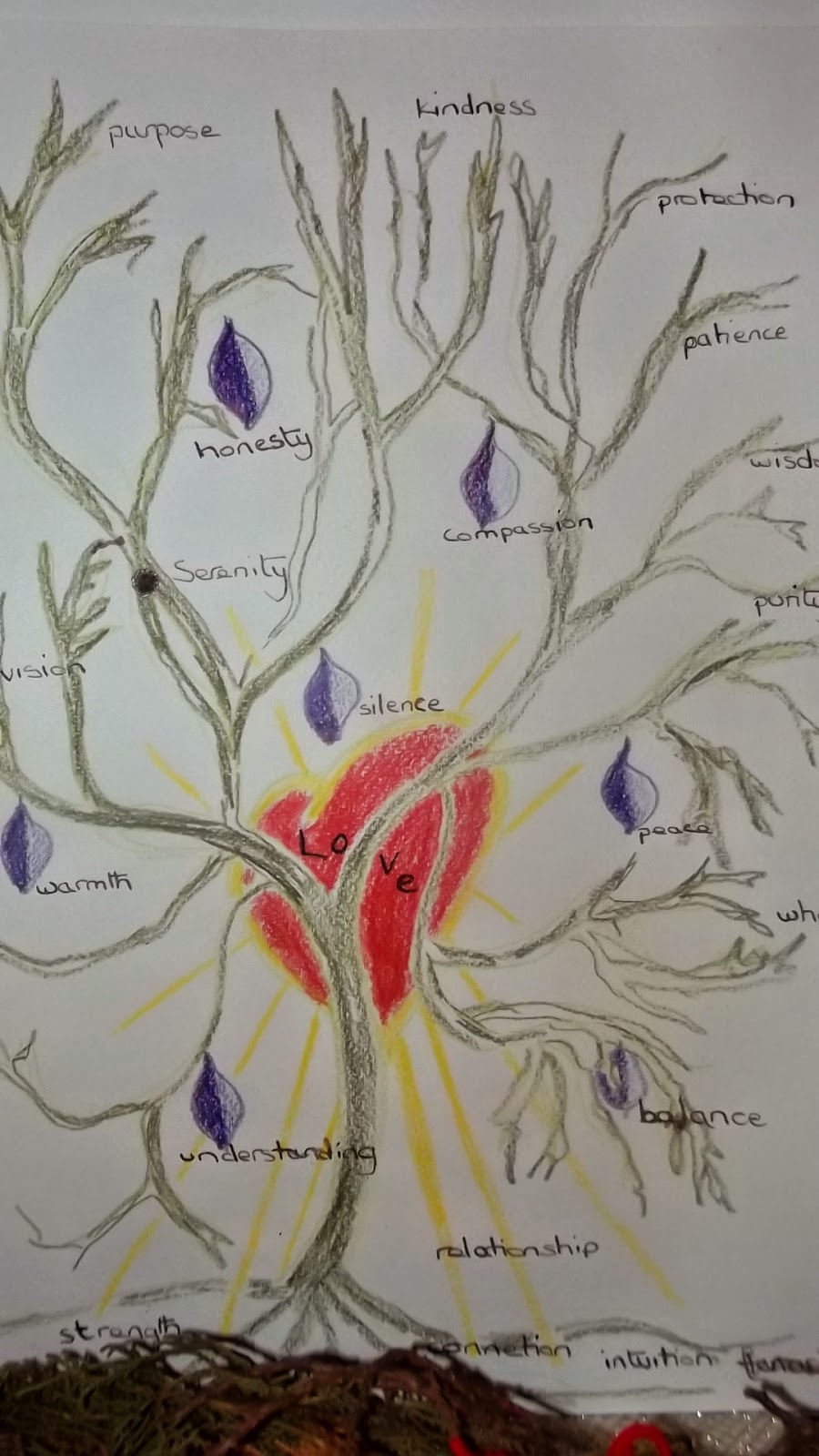
Juliette’s Tree

DSCF5462


(By Juliette Rich)

« Older Entries Newer Entries »
#

Call: 01803 ~ 862541
Email: enquiries@open-spirit.co.uk
Copyright © Open Spirit 2015

Design and development
by: Graphic Alchemy
Website last updated: 02 Dec 2020